

The short answer
Yes, you can absolutely damage a structure with too much moisture.
Overwatering foundation Dallas properties is a common failure mode rather than a theoretical risk. We see this specific issue frequently in North Texas.
During a hot DFW summer, the southwest side of a home can demand up to 50% more water than a shaded northeast corner. Homeowners usually focus on drought protection, which makes perfect sense. Extended dry weather causes clay to contract and structures to settle.
Our team often has to explain that the same soil swells powerfully when it takes water back on. Sustained saturation under one specific area can literally push a building upward.
The primary objective is finding a balance, rather than simply maximizing water volume.
Our broader guide on foundation maintenance puts this watering advice in context with drainage and grade.
How excess moisture causes heave
Blackland clay and the clays weathering from Eagle Ford Shale are highly expansive. They take on water, swell, and exert immense pressure on whatever sits above them.
We know from geotechnical data that the montmorillonite minerals in Houston Black clay can exert uplift pressures of thousands of pounds per square foot.
That specific force is strong enough to easily crack reinforced concrete slabs.
Localized Saturation Risks
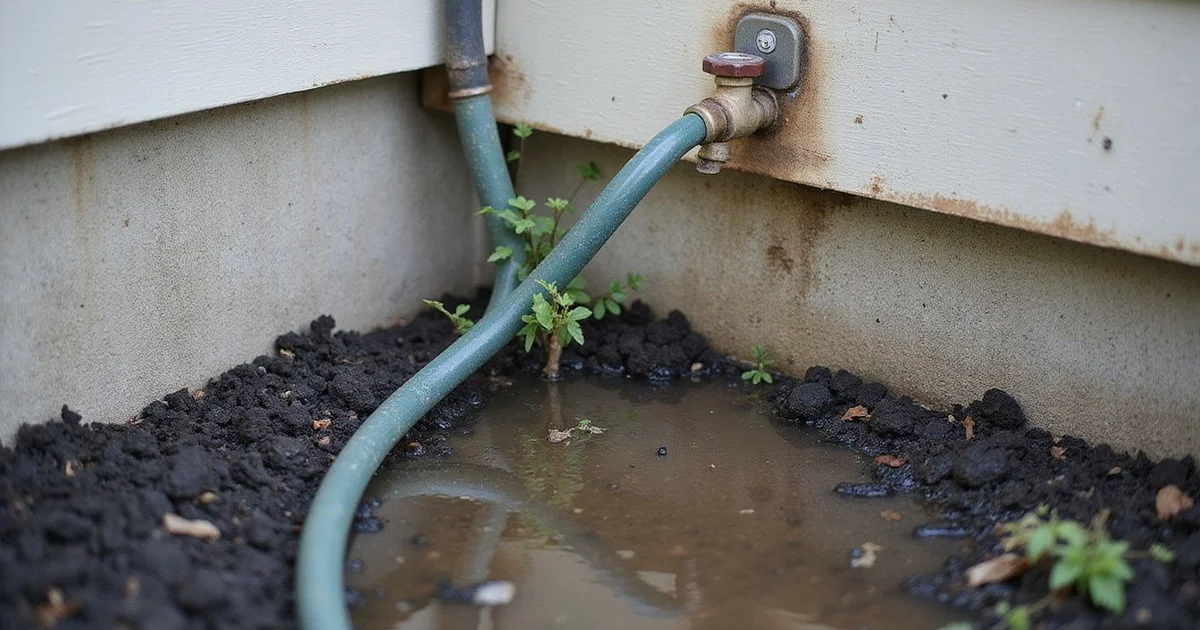
Concentrate that moisture where a soaker hose has been running against one elevation for months. Think about an irrigation head spraying the exact same corner every single evening.
Our technicians frequently find that the soil under that saturated area expands while the rest of the perimeter does not. That differential movement is exactly what distorts a structure.
The upward movement caused by soil expansion is called heave.
We treat this condition very differently from downward settlement. The necessary repairs require a completely separate approach.
Our guide on heave versus settlement explains why this distinction changes the repair response.
| Movement Type | Primary Cause | Direction of Force |
|---|---|---|
| Heave | Excess soil saturation and clay expansion. | Upward push against the slab. |
| Settlement | Soil drying, contracting, and pulling away. | Downward drop of the structure. |
Why we do not publish a watering schedule
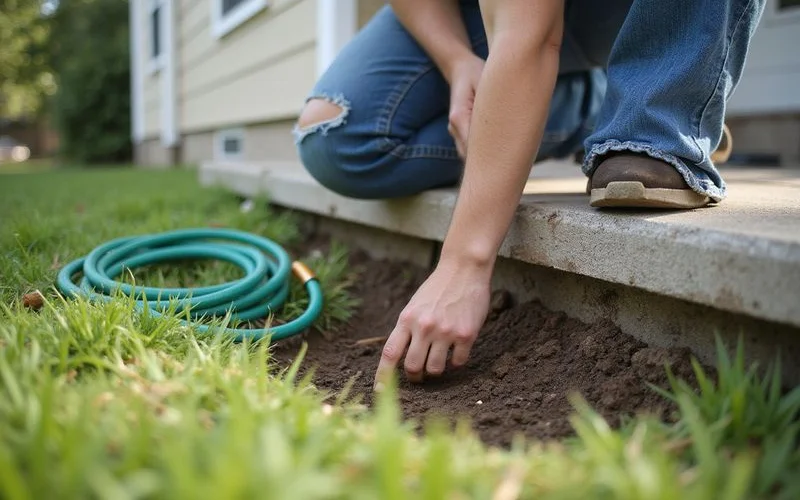
You will find plenty of sources prescribing a specific number of minutes per day for North Texas homes.
We will not add to those rigid recommendations, for a straightforward reason.
The daily variables differ far too much between adjacent lots. Shade, slope, soil depth, tree cover, drainage, and irrigation coverage all change how much water a perimeter actually needs.
The Impact of Landscaping on Soil Moisture
Plants heavily dictate water absorption rates around your house.
Our 2026 site evaluations confirm that local vegetation changes the equation entirely. Mature live oaks can draw massive amounts of moisture out of the ground daily. Drought-tolerant plants like Texas Lantana have entirely different hydration needs than standard turfgrass.
We recommend following professional landscape guidelines to prevent localized moisture issues. Keep shrubs planted a minimum of three feet away from the slab. Medium and large trees require at least ten feet of clearance to stop roots from competing for foundation moisture.
A fixed watering schedule based on weather apps or mapped soil types ignores all of those details. Watching the soil does not.
What balanced moisture looks like
Maintaining the right hydration level requires strategy and proper equipment placement.
We see many well-intentioned setups that actually cause more harm than good.
To protect the grade beam, which is usually 24 to 48 inches thick, moisture must be managed deeply and consistently.
- Even around the perimeter. You must include the side of the house you never walk past.
- Consistently damp, not cycling. Soil that stays moderately moist beats soil that alternates between saturated and cracked.
- Hoses set back from the slab. To optimize a soaker hose foundation, Dallas professionals dictate placing lines 12 to 18 inches away from the concrete. Setting them tight against the wall can wash out the dirt.
- Buried for protection. Burying Netafim drip lines 6 to 12 inches deep maximizes root-zone penetration and prevents UV degradation.
- Light and frequent over heavy and occasional. Short runs more often move the moisture front more gently through the clay profile.
- Responsive to rain. Stop running the system when the weather has done the job for you.
Smart irrigation controllers like the Rachio 3 can automate this responsiveness using local weather data.
We highly suggest upgrading to a dedicated smart zone just for the house perimeter. Your foundation should never share a watering zone with your grass or shrubs.
Signs you are under-watering
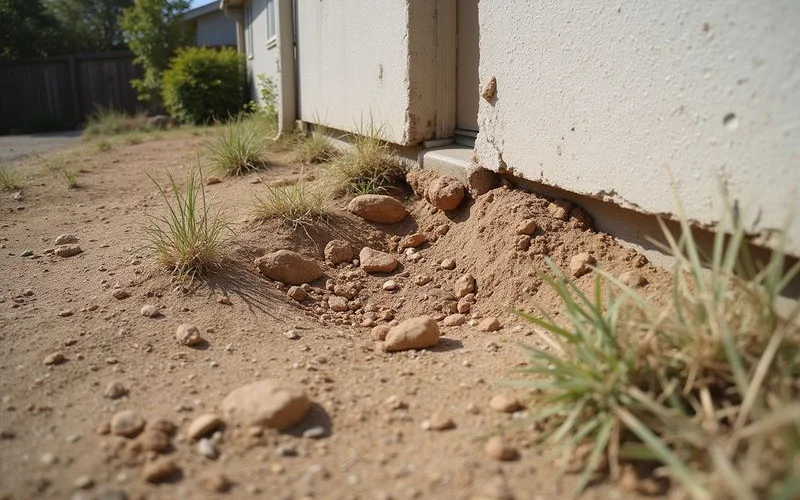
The clearest indicator is a visible gap between the dirt and the slab edge in late summer.
We expect some minor separation in Dallas clay during a typical drought. Gaps you could literally lose a hand into suggest the soil around that section has contracted substantially.
Blackland Prairie clay has some of the highest shrink-swell potential mapped in the country. Our foundation experts warn that extreme drying leaves the structure completely unsupported.
Common Visual Cues of Dehydration
You can spot the damage before it affects the indoor drywall.
Look for these specific outdoor indicators of severe dehydration:
- Wide fissures and deep cracks spreading across the lawn.
- Plants under visible stress along one specific elevation.
- Separation gaps that are noticeably worse on one side of the building than another.
These symptoms all point in the exact same direction. The dirt needs more consistent hydration.
Signs you are over-watering
Excessive moisture leaves behind physical clues long before a structural failure occurs.
We look for standing water at the perimeter that refuses to drain. Soil that stays soggy for days after a cycle finishes is a massive red flag.
Our teams frequently spot these other specific warning signs of saturation:
- Persistent dampness against the exterior brick.
- A pier and beam crawlspace that has become noticeably more humid.
- Moss or algae growing on hardscapes directly next to the wall.
- An increase in moisture-loving pests, like earwigs, congregating near the slab according to EPA WaterSense guidelines.
Hidden Water Sources and Sudden Changes
Sometimes the excess water is completely unintentional.
We frequently discover hidden plumbing failures causing severe soil expansion. Data shows that up to 45% of Frisco and DFW homes built between 1990 and 2008 with aging copper lines might experience hidden slab leaks.
A broken sub-surface pipe acts just like the most severe foundation watering mistakes, creating a massive, continuous saturation event right under your floorboards.
Pro Tip: The most telling pattern is new structural symptoms appearing after a change in habit. If you started running hoses heavily in July and a door began sticking in September, the timing is highly relevant.
We pay very close attention to the exact timeline of your property issues.
You must mention that specific sequence of events when booking an evaluation.
Drainage and watering pull in the same direction
They are the exact same problem viewed from two different sides. Watering adds moisture deliberately, while proper drainage removes it safely.
We know that both systems are aiming at the same outcome. The goal is an even and reasonably stable moisture state around the entire footprint of the building.
If your grade slopes toward the house, you have a major structural liability. Our crews regularly see downspouts discharging directly at the wall. You are effectively flooding that specific corner every single time it rains, regardless of what your hoses are doing.
Correcting Common Moisture Traps
Correcting drainage issues usually matters far more than adjusting a sprinkler routine.
We highly recommend addressing these specific landscape features to prevent accidental saturation:
- Low spots collecting runoff: Install a French drain system to route heavy rainwater safely away from the slab.
- Improper grading: Ensure the dirt slopes away from the house at a drop of at least 6 inches over the first 10 feet.
- Crowded flower beds: Avoid planting dense shrubs directly against the exterior walls, as they trap excessive moisture in the clay.
When to stop adjusting and get it measured
If new cracks have appeared, a door has started binding on one edge, or floors feel different from last year, guessing is no longer an option.
The most useful next step is precise measurement rather than another season of experimenting with the hose.
We require concrete data to properly diagnose a shifting building. A foundation elevation survey shows whether there is a high area or a low area.
Modern Measurement Tools
Our inspectors use tools like ZIPLEVEL precision altimeters to record the exact floor heights across the structure.
These devices help us identify elevation changes down to a fraction of an inch.
We typically take measurements every 10 to 15 feet around the perimeter beam to establish a highly accurate baseline. This specific data is what separates heave from settlement and determines what actually needs doing.
Taking Action on the Data
Knowing the true elevation profile prevents you from paying for the wrong repairs.
We use this information to recommend a permanent structural solution. If you suspect a plumbing issue is driving the movement, a plumber can perform a hydrostatic pressure test to confirm a sub-surface leak.
Stop treating the symptoms and let professionals measure the actual problem. Contact a structural expert today to schedule a comprehensive foundation elevation survey and protect your property investment.