

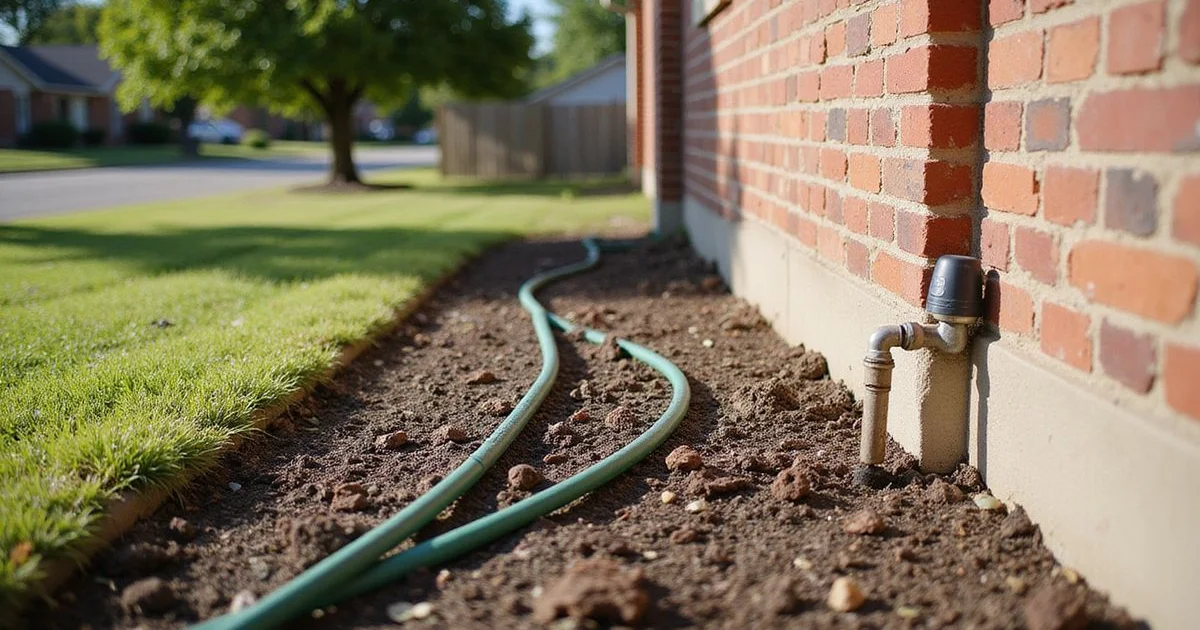
What foundation maintenance is actually for
You cannot maintain a foundation the way you maintain a roof. What you can manage is the ground around it, and in North Texas that is most of the battle.
Expansive clay changes volume with moisture. Damage comes from the swing, and particularly from a swing that is uneven around the building. Everything in this guide aims at making conditions around the perimeter more consistent.
None of it substitutes for measurement when something changes. It reduces the likelihood of change.
Manage roof runoff first
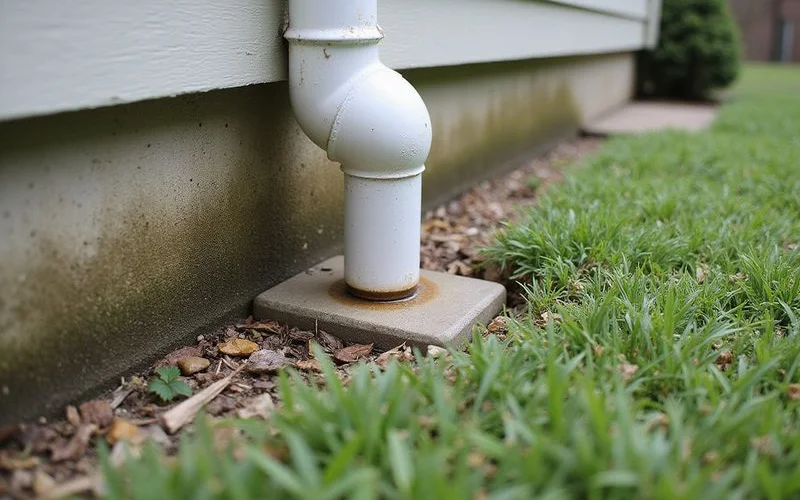
A roof collects a large volume of water and delivers it through a handful of points. Discharging that at the wall is the most concentrated moisture source most houses have, and it is also the cheapest to fix.
- Keep gutters clear so water reaches the downspouts rather than overflowing at the fascia.
- Check downspouts are actually connected and not discharging behind a shrub.
- Extend discharge well away from the foundation.
- If you have buried lines, check that outlets and pop-up emitters are clear. A blocked line backs water up exactly where you do not want it.
Check grade once a year
Soil should slope away from the house over the first several feet. It flattens over time as beds get topped up, mulch accumulates, and soil settles.
Walk the perimeter after heavy rain and look for where water sits. If a low point is against the house and regrading will not resolve it, that is a case for drainage work rather than another season of watching.
Watering, without a fixed schedule
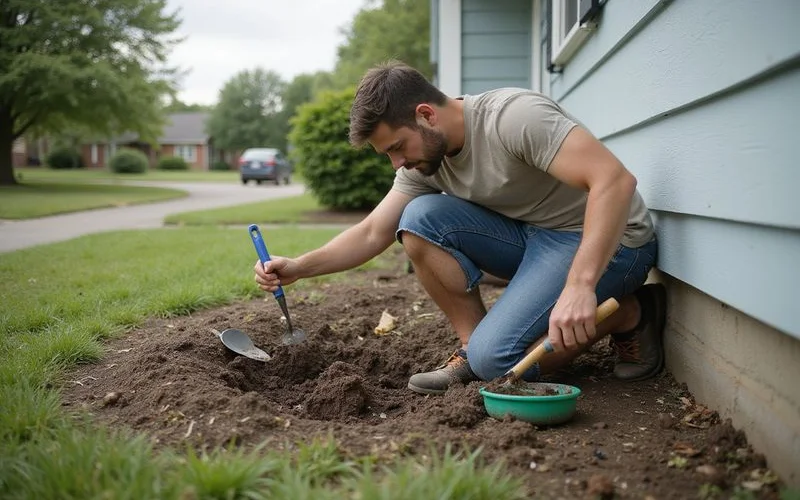
Foundation watering is genuinely useful during long dry periods and genuinely easy to overdo. The target is consistency, not volume.
What works:
- Even moisture around the whole perimeter, including the side you never look at.
- Soaker hoses placed a consistent distance out from the slab edge rather than tight against it.
- Light and frequent rather than heavy and occasional.
- Stopping when rain has done the job.
What we would avoid is a prescribed number of minutes per day derived from a chart or from someone’s neighborhood. Shade, slope, tree cover, soil, and drainage vary enough between adjacent lots to make a universal schedule meaningless, and over-saturating clay causes its own problems. Our guide on whether you can overwater a foundation covers that side.
Trees and roots
Mature trees draw substantial moisture from clay within their root zone, and the effect concentrates on one side of a house.
This is not an argument for removal. A root barrier addresses the mechanism while keeping the tree, which is usually what homeowners want. What is worth doing annually is noticing whether the driest soil and the widest perimeter gaps are consistently on the tree side.
When planting, give large species genuine room. Mature size, not nursery size, is what matters.
Watch the plumbing
An under-slab leak can saturate soil beneath one area for months before anyone notices. Signs worth taking seriously: an unexplained rise in the water bill, a warm patch on a slab floor, damp that does not dry, or the sound of water running when nothing is on.
Suspected leaks are worth testing promptly. They are one of the few foundation-adjacent problems that gets meaningfully worse the longer it runs.
An annual walk-around
Once a year, ideally at the same point in the seasonal cycle so the comparison means something:
- Photograph any cracks you are tracking, with something for scale and the date noted.
- Check doors and windows for new binding.
- Look at the perimeter for soil pulling away from the slab.
- Check gutters, downspouts, extensions, and drain outlets.
- Note any change in how the floors feel.
Keep the photographs somewhere you will find them. A year-on-year set is the single most useful thing a homeowner can bring to an evaluation.
When maintenance is not the answer
Book an evaluation when something has changed rather than persisted: a new crack, a door that has started binding on one edge, a floor that feels different from last year, or brick separation that was not there in spring.
Maintenance manages conditions. Only measurement establishes whether the structure itself has moved, and standard homeowner evaluations carry no fee, so there is little reason to wait and wonder.