

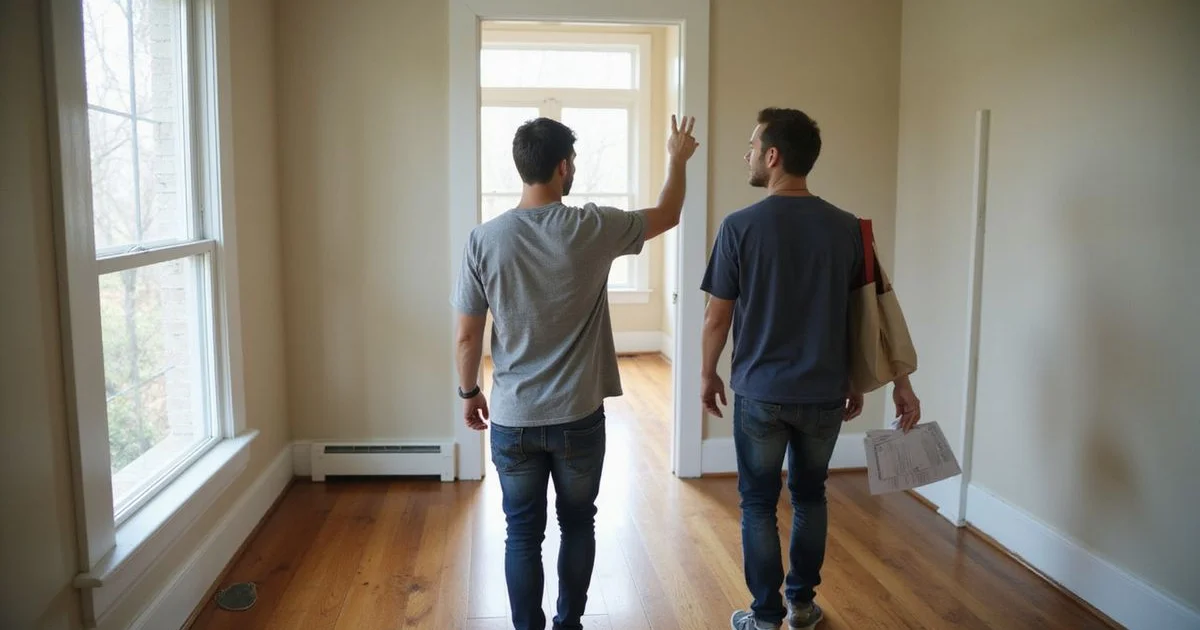
Our team regularly reviews property disclosures with clients, and few things cause more anxiety than buying a home with foundation repair.
This hesitation is completely understandable. Unresolved structural problems can reduce a property’s market value by up to 20%.
But a completed, well-documented fix completely flips that script.
We are going to break down exactly how to evaluate a home with prior foundation work, what specific records to demand, and how to verify the house is structurally sound today.
Prior repair is information, not a verdict
In areas with expansive clay soil, a house with documented foundation work is incredibly common. Treating these properties as automatically problematic would unnecessarily rule out a massive share of the market.
The useful question is not whether the house has had work done. Instead, you must determine if the work was properly diagnosed, executed, and backed by a solid guarantee.
Our experts know that a repaired home often means the previous owner already absorbed a $5,000 to $15,000 stabilization project. That is a massive financial bullet you get to dodge. A completed job brings the house back to its full market potential. We will cover exactly what paperwork to request and how to read those documents to protect your investment.
Documented repair is usually the better situation
Consider two identical houses on the market. One has visible cracks, no paperwork, and a seller who claims a guy fixed it years ago. The other property comes with a complete history, including installation logs for steel helical piers and an active transferable warranty.
The second house has a verified structural history. The first house presents a massive financial risk.
Our experience shows that homes with undocumented, unresolved structural issues can linger on the market for months. Buyers often walk away because they fear a sudden $20,000 repair bill. A fully documented foundation repair history home sale gives buyers confidence and removes those negotiation hurdles.
| Factor | Documented Repair | Undocumented Repair |
|---|---|---|
| Property Value | Restores full market potential | Can reduce total value by up to 20% |
| Buyer Confidence | High; verified structural history | Low; high risk of hidden expenses |
| Negotiations | Seller retains pricing power | Buyer demands steep discounts |
The records to request

Ask the seller for this specific documentation:
- Scope of work and invoice. Detail exactly what contractors installed, such as epoxy crack injections or steel push piers, and the total cost.
- Pre- and post-repair elevation records. Show the starting floor variance and the final recovered measurements.
- Pier installation log. Record the depth and pressure achieved for every single pier driven into the ground.
- Permit and inspection sign-off. Prove the local municipality approved the completed project.
- Engineering letter, if any. Confirm a licensed Professional Engineer (PE) specified or verified the design.
- Plumbing test results. Provide the outcome of a post-lift hydrostatic pressure test. Lifting a heavy concrete slab can snap fragile pipes underneath, leading to a hidden $2,000 to $5,000 plumbing repair later.
- Warranty document. Outline the full legal terms, including all transfer requirements and exclusions.
If a seller cannot produce several of these documents, you should proceed with caution. Missing paperwork does not guarantee the work was bad. It simply means you lack the proof needed to verify its quality.
What a repair history actually shows
A detailed repair file tells you exactly where the soil failed and how the contractor stabilized the house. It does not guarantee the dirt will never shift again, because no company can completely control expansive clay soils or extreme droughts.
A properly documented repair file is your best defense against the unpredictable nature of expansive soil.
Our team advises clients to read the elevation records very carefully. They reveal the starting floor variance and how much lift the crew achieved. A project that successfully stabilized the house without perfectly leveling every floor is a completely legitimate outcome. The paperwork will show this honesty clearly.
You should also map out the specific pier locations. Contractors typically charge $1,000 to $3,000 per pier, so they only install them where absolutely necessary. If the current structural symptoms are on the opposite side of the house, you are dealing with a new issue rather than a failure of the previous work.
Engineering letters and independent assessment
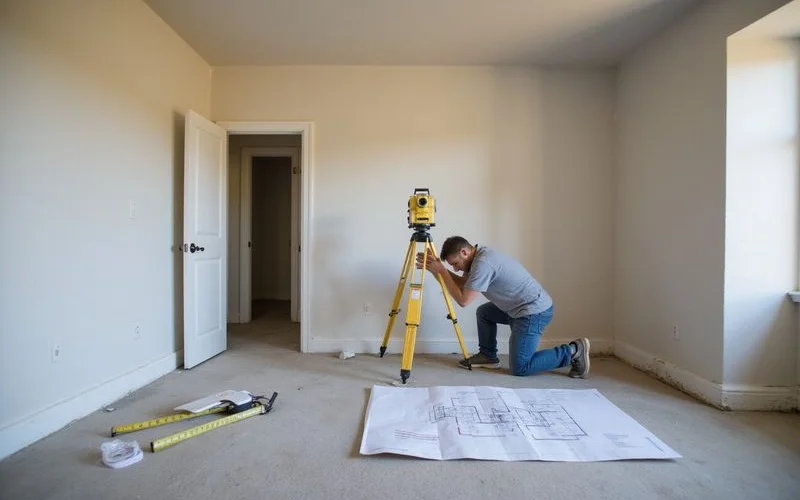
An independent structural engineer provides a massive advantage in any real estate transaction. These licensed professionals have absolutely no financial stake in selling you a repair job.
Our staff highly recommends that buyers commission a fresh, independent structural assessment before closing. A licensed Professional Engineer (PE) typically charges between $500 and $1,500 for a full foundation inspection in 2026. This fee is incredibly cheap insurance compared to discovering a severe problem after you move in. An updated report gives you objective, measured facts to use during price negotiations.
Our guide on contractor evaluation versus structural engineer assessment sets out the difference and when each is appropriate.
Warranty transfer
A transferable warranty provides incredible peace of mind, but the transfer process is strictly time-bound. Contractors often require the new owner to submit written notification within 30 days of closing.
Some companies also require a modest transfer fee, along with a brief site inspection. You must confirm these exact steps before you sign your closing papers. Missing that strict 30-day window can void a Lifetime Transferable Warranty completely.
Our experts have seen buyers lose coverage over a simple missed email, leaving them fully liable if the foundation settles again. That simple mistake can turn a free adjustment into a brand new $2,000 expense. You must verify these details early in the process. Our guide on foundation repair warranties covers what the documents typically contain.
Questions to ask in the transaction
Whether you are purchasing a property or preparing to list one, asking the right questions prevents costly surprises.
Essential Questions for Buyers
You need to verify the structural integrity of the home before committing your funds.
- May I see the complete repair documentation package, including the original scope of work?
- Is the Lifetime Transferable Warranty active, and what exact paperwork does the transfer require?
- Did the city issue a permit, and did an inspector sign off on the final job?
- Did a licensed plumber perform a hydrostatic pressure test before and after the lift?
- Has anything changed since the contractor finished, such as new drywall cracks or sticking doors?
Strategic Questions for Sellers
You must organize your property records to defend your asking price.
- Do I possess the complete project package, and can I call the original contractor to reproduce missing files?
- Is my warranty currently valid, and can I provide the exact transfer steps in writing to potential buyers?
- Should I pay $500 for a new Professional Engineer (PE) evaluation to hand buyers objective, up-to-date structural evidence?
For sellers: documentation is worth the effort
A seller who presents a neatly organized, comprehensive documentation package negotiates from a position of power. Buyers lose the leverage to demand steep price discounts when they see clear proof of professional stabilization.
If your records are missing, call the original contractor immediately. Major repair companies often digitize and retain project files for a decade or more. A fresh 2026 engineering evaluation also provides tremendous value during a home sale.
Our team consistently finds that providing a buyer with measured, current data removes the fear of the unknown. It replaces a vague story about old repairs with cold, hard facts. You will sell the house faster and protect your equity in the process.
Conclusion
Buying a home with foundation repair does not have to be a stressful ordeal. As long as you demand the right documentation and verify the current conditions, you can secure a fantastic property.
Start by reviewing the seller’s disclosures carefully.
Always schedule an independent structural inspection before you sign the final closing documents.