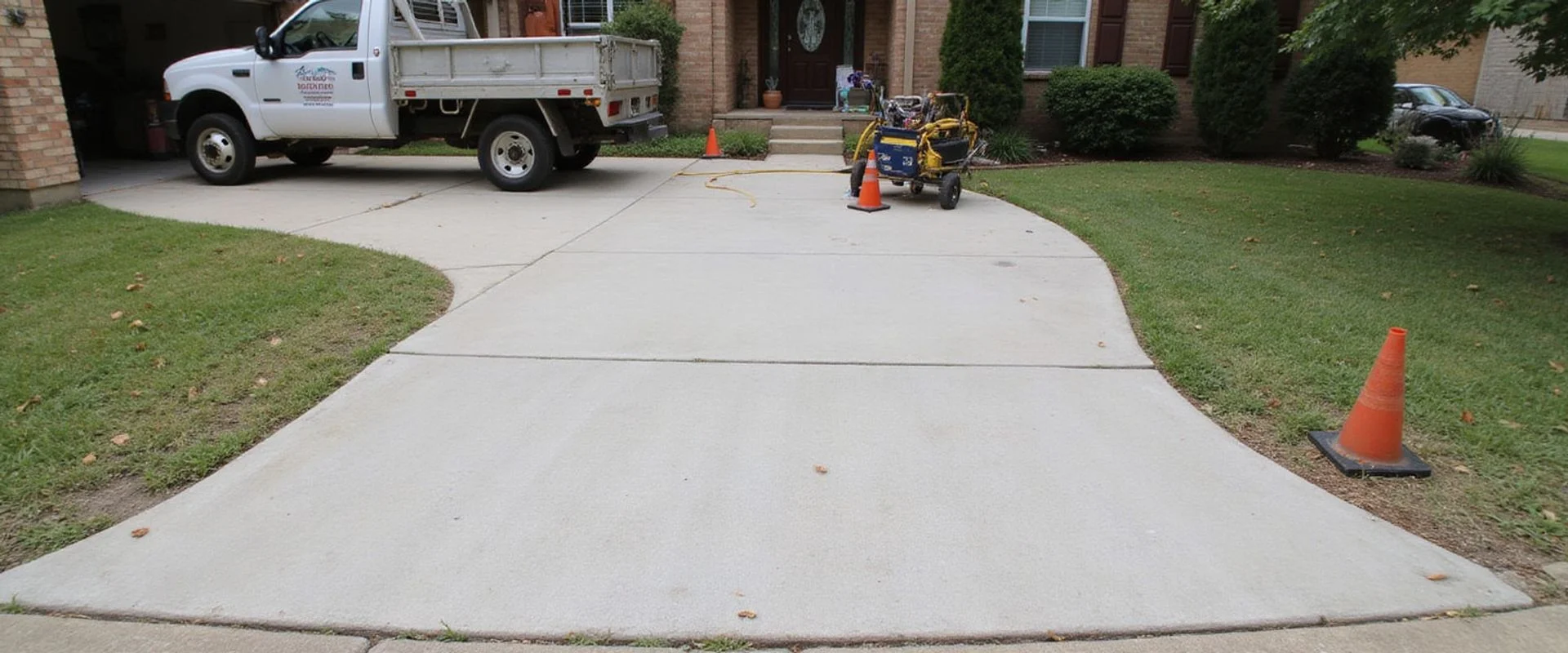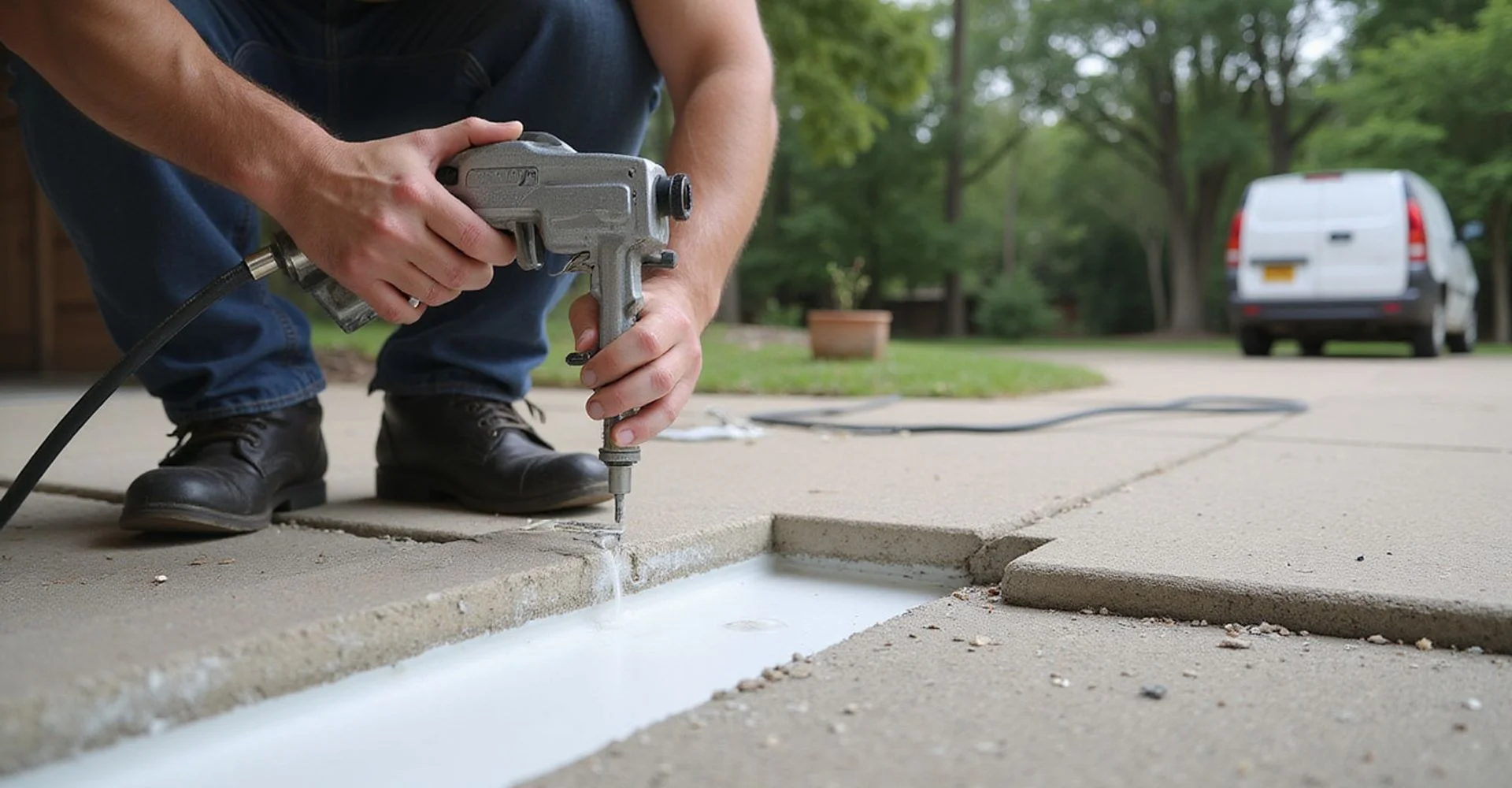
Technician injecting polyurethane foam through a small port in a settled concrete driveway panel
Same-Day Use

Polyurethane Concrete Leveling for Dallas Flatwork

Polyurethane foam leveling for settled driveways, patios, sidewalks, and pool decks, kept separate from structural foundation work.

  • 15+ years in North Texas
  • City-permitted and inspected
  • Transferable Written Warranty
4.9 (150+ Google reviews)
1 Business Day Response
4,850+ Evaluations
Transferable Written Warranty

What concrete leveling is

Concrete leveling raises settled flatwork back to a target profile by injecting high-density polyurethane foam underneath it. Small ports are drilled through the panel, the foam is injected, it expands to fill voids in the soil beneath, and continued injection lifts the slab while elevation is monitored from above.

The method is trenchless. Nothing is excavated, nothing is removed, and the surface is generally back in use the same day. The industry calls it polyjacking, foam jacking, or polyurethane concrete raising depending on who is writing the brochure. It is flatwork correction, distinct from the structural foundation repair in Dallas that piers and underpinning address.

Which surfaces are candidates

Flatwork that sits on soil and carries only its own weight plus traffic: driveways and garage approaches, sidewalks and walkways, patios, pool decks, porch slabs, steps, and landings.

The requirements are straightforward. The panel needs to be largely intact rather than fractured into pieces. The sub-base needs to be capable of holding the raised position once voids are filled. And the settlement needs to be the kind that a lift actually resolves rather than a symptom of erosion that is still running.

What it is not

This is not structural foundation repair, and the distinction matters enough that we keep the services on separate pages.

A house foundation carries the structural load of the building. When it moves, the correction is underpinning: piers driven to bearing soil or rock, with the load transferred onto them. Foam under a slab does not reach bearing strata and does not carry structural load. Anyone offering to lift your house with foam is describing a different product than the one on this page.

If your concern is the house rather than the driveway, slab foundation repair is the relevant service and an evaluation is the right first step.

How the process works

Assessment. We confirm the panels are candidates, look at what caused the settlement, and check whether a lift will preserve drainage away from the structure.

Port drilling. Penny-sized holes are drilled through the panel in a pattern matched to its size and the void distribution beneath.

Injection. Two-part polyurethane is injected. It expands on contact, filling voids first. Once voids are full, continued injection generates lift.

Monitoring. Elevation is watched continuously during the lift, because concrete raised past its target stresses the joints and neighbouring panels.

Patching. Ports are patched with a cement-based compound and the surface is returned to use, typically the same day.

Why flatwork settles in North Texas

Expansive clay shrinking during summer drought drops whatever sits on it. Water washing fines out from under a slab, frequently from a downspout that has discharged at the same point for years or an irrigation line with a slow leak, creates voids the concrete then bridges until it cannot. Poor compaction at original placement never had the capacity in the first place. Tree roots displace soil directly and dry it indirectly.

Identifying which applies matters, because an active water source will simply create the next void. Where that is what we find, correcting the source comes first, and drainage work may be the more useful spend.

Drainage and trip hazards

Two practical considerations shape most residential jobs.

Drainage first: flatwork is usually sloped on purpose. Raising a patio to dead level can flatten or reverse the fall and send water back toward the house. Our target profile always preserves fall away from the structure, even where that means accepting a slightly less perfect looking result.

Trip hazards second: a lip at a joint on a public-facing sidewalk or a main approach is a genuine liability, and it is one of the most common reasons homeowners and property managers call. A lift that removes the lip solves the problem at a fraction of replacement cost.

What you receive

A written quote stating the panels treated, the target profile, drainage considerations, the expected lift, port patching, and any conditions we identified that would affect longevity. Where we think replacement is the better answer, that is what the document says, and our guide on polyjacking versus mudjacking covers the method comparison in more detail.
What affects the cost of concrete leveling?

We publish cost factors rather than a headline price, because scope is what moves the number. Your written quote itemizes each of these.

Area treated
Pricing follows the square footage of flatwork raised and the number of panels involved, not a per-hole count.
Lift height and void volume
A panel that has dropped an inch takes far less material than one sitting over a significant washout void. Foam volume drives material cost.
Sub-base condition
Where soil beneath has washed out, void filling comes before lifting. Severe erosion may need the cause addressed before leveling is worthwhile.
Slab condition
Sound panels raise cleanly. Panels already broken into several pieces may not be candidates, and we say so rather than lifting something that will fail.
Access
Equipment needs to reach the work. Back patios and pool decks behind narrow gates take longer to set up than an open driveway.
Drainage implications
Flatwork slope directs water. Raising a panel changes that slope, so the target profile has to preserve drainage away from the house.
Why choose us

Why choose Dallas Foundation Repair for concrete leveling

Flatwork kept separate from structure

Settled concrete is not a foundation diagnosis. We do not bundle flatwork into a structural quote or use it as a route into one.

Drainage preserved

Lift targets keep water running away from the house. Raising a panel without considering slope can send runoff toward the foundation.

Honest about candidacy

Badly fractured slabs and severe washouts are sometimes replacement jobs. We tell you when foam is not the right answer.

Small ports, tidy finish

Injection holes are roughly penny-sized and patched, rather than the larger holes slurry methods require.

No added load

High-density foam is light compared with slurry, so it does not add weight to a sub-base that is already struggling.

Quick turnaround

Most residential flatwork is treated in a morning and back in service the same day.

Process

How our concrete leveling projects run

  1. Assess the flatwork

    We confirm the panels are candidates, check sub-base condition, and identify whether settlement is local or part of a wider drainage issue.

  2. Set the target profile

    Lift targets preserve drainage slope away from structures. Where a lift would trap water, we say so before quoting.

  3. Drill, inject, monitor

    Penny-sized ports are drilled and high-density polyurethane is injected, filling voids first, then raising the panel while elevation is monitored.

  4. Patch and return to use

    Ports are patched and the surface is generally ready for use the same day, since the foam reaches working strength quickly.

Polyurethane foam compared with slurry leveling

Feature Typical provider Dallas Foundation Repair
Injection hole size Larger slurry holes Penny-sized ports
Added weight Heavy slurry on weak sub-base Lightweight high-density foam
Cure and return to use Often next day Typically same day
Washout resistance Slurry can erode Closed-cell foam resists water
Drainage check Not always considered Target profile preserves slope away from the house
Scope honesty Upsold to structural work Flatwork quoted as flatwork
Our work

Concrete Leveling in the field

Documented project conditions from North Texas properties. Click any image to enlarge.

Testimonials

What customers say about our concrete leveling work

4.9 average across 150+ Google reviews

“Our settled driveway was leveled with foam in a morning and the trip hazard is gone. Clear pricing, no upsell to structural work we didn't need.”
Elena G. Plano, TX
“They checked that raising the patio wouldn't send water back toward the house before quoting. That detail mattered.”
Mark R. Richardson, TX
“Straightforward job, tidy patches, back to parking on it the same afternoon.”
James T. Irving, TX

Reviews shown are representative customer feedback compiled for this website.

Questions we get asked

Concrete Leveling FAQs

What surfaces can polyurethane concrete leveling fix?
Supported flatwork: driveways, garage approaches, sidewalks, patios, pool decks, porch slabs, and steps or landings that have settled as a unit. The common requirement is that the concrete is sitting on soil rather than spanning between structural supports, and that the panel is largely intact. What it does not cover is structural foundation work. A house foundation carries the building's load and is corrected with piers, which is a different service entirely.
How is foam leveling different from mudjacking?
Both raise concrete by injecting material underneath, but the material differs and so do the consequences. Mudjacking pumps a cement-based slurry through larger holes; it is heavy, which matters when the sub-base is already weak, and it can erode over time. Polyurethane foam is injected through penny-sized ports, expands to fill voids, weighs a fraction as much, resists water, and reaches working strength within minutes rather than hours. Slurry can cost less up front, and on some jobs that trade is reasonable.
How long until I can drive on it?
Usually the same day, often within an hour of completion. High-density polyurethane reaches most of its strength very quickly, which is the main practical advantage over slurry methods on driveways and garage approaches where losing access for a day is genuinely inconvenient.
Will the holes be visible afterwards?
Slightly. The injection ports are roughly the diameter of a penny and are patched with a cement-based compound after the lift. On broomed or textured concrete the patches blend well. On smooth, coloured, or stamped concrete they remain visible on close inspection, which is worth knowing before you commit if the appearance of a decorative surface matters to you.
Does settled concrete mean my foundation has a problem?
Not by itself. Driveways, patios, and sidewalks sit on soil that was compacted separately from the house pad and they carry nothing but their own weight and whatever parks on them. They settle for their own reasons: washout, poor initial compaction, tree roots, or a leaking irrigation line. If the house foundation also shows symptoms, that is worth evaluating on its own merits, but we will not use a sunken driveway as evidence about your slab.
Can any concrete be lifted, or are some slabs too far gone?
Panels that have broken into several pieces, concrete with significant spalling or deterioration, and slabs sitting over severe washout may not be candidates. Lifting fragments produces a lumpy, unstable result that fails quickly. Where replacement is the honest answer, we say so. We would rather lose the job than take money for a repair we expect to fail.
What causes flatwork to settle in Dallas?
Expansive clay shrinking during drought, which drops whatever sits on it. Water washing out fines beneath a slab, often from a downspout discharging at one point for years or from an irrigation leak. Poor compaction when the flatwork was first placed. Tree roots displacing or drying the soil beneath. Knowing which is at work matters, because a washout that is still active will simply recur if the water source is not addressed.
Will leveling my patio affect drainage?
It can, which is why we set the target profile before injecting rather than simply chasing level. Flatwork is usually sloped deliberately to move water away from the structure. Raising a panel to dead level can flatten or reverse that slope and send runoff toward the foundation, which is a worse outcome than the settlement was. The target always preserves drainage away from the house.
How long does foam leveling last?
The foam itself is stable, closed-cell, and does not break down or wash out. What determines longevity is whether the condition that caused the settlement persists. Fill a void created by an active leak and the leak will create another one. Address the water source and the repair generally holds. We note site conditions we observe that would undermine the work.
Do you offer concrete leveling as a route into foundation sales?
No. Flatwork leveling is quoted as flatwork leveling. If you contact us about a sunken driveway and we notice something about the house worth mentioning, we will mention it, but the quote in front of you stays the quote you asked for. Bundling unrelated structural work into a flatwork job is exactly the practice this business positions itself against.
No fee for homeowner evaluations

Ready to get a written quote for concrete leveling?

We start with an elevation survey, explain the findings, and document the scope before any work is scheduled.

  • Elevation survey before any recommendation
  • Itemized written scope and exclusions
  • Transferable written warranty
Call Request a Quote