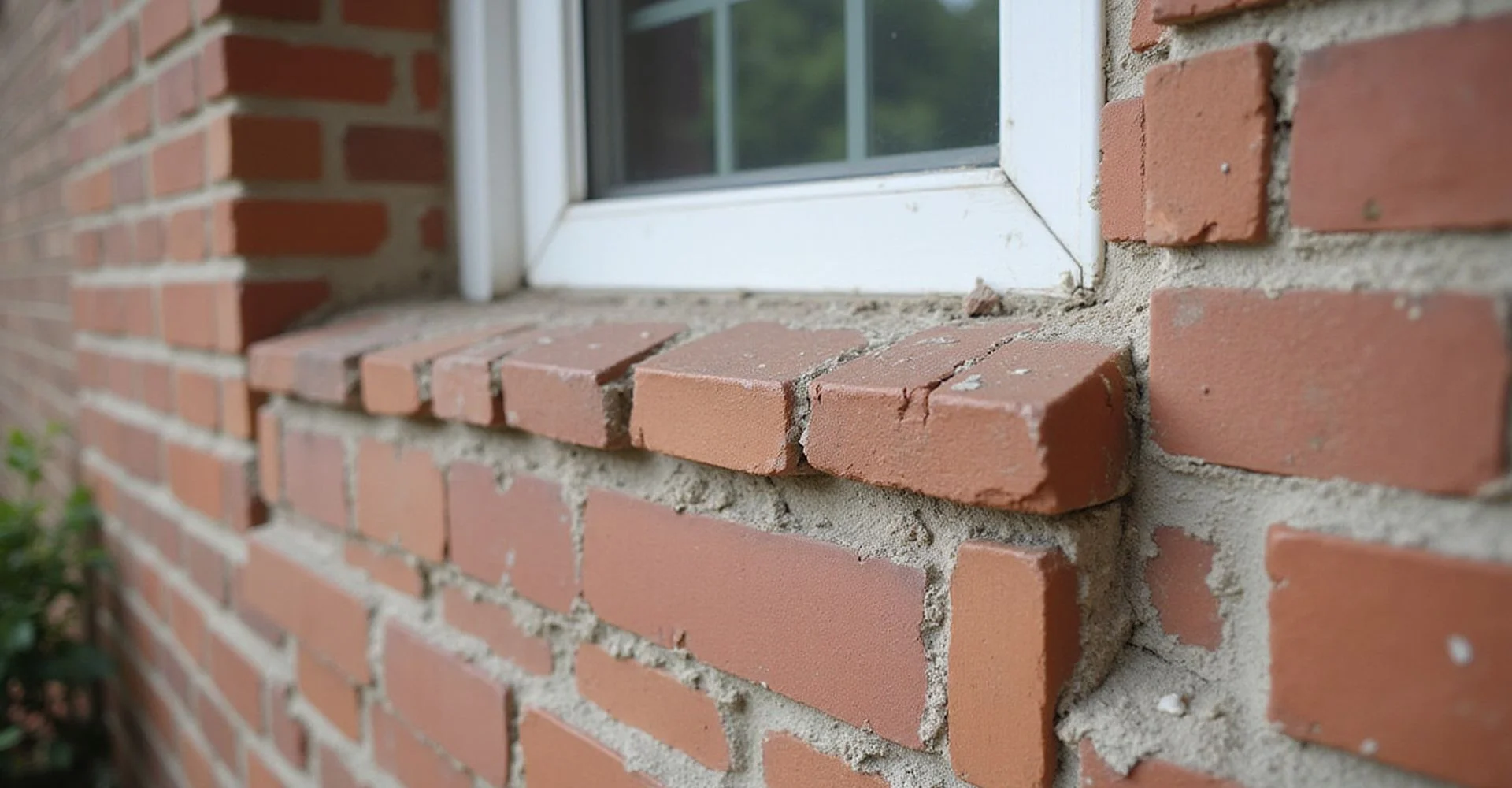
Stair-step crack running through exterior brick mortar joints near a window on a Dallas home

Common Foundation Warning Signs in Dallas Homes

What brick cracks, interior cracks, sticking doors, and uneven floors do and do not tell you about a Dallas foundation.

  • 15+ years in North Texas
  • City-permitted and inspected
  • Transferable Written Warranty
4.9 (150+ Google reviews)
1 Business Day Response
4,850+ Evaluations
Transferable Written Warranty

Observation is not diagnosis

This page exists to draw one line clearly. What you can see is an observation. What is happening structurally is a diagnosis. They are related, but they are not the same thing, and treating them as interchangeable is how homeowners end up buying repairs they did not need or ignoring movement they should have measured.

A crack is evidence that something moved at some point. It does not tell you how much, whether the movement is continuing, what caused it, or whether the structure has been compromised. Those questions are answered by measurement, which is what a foundation evaluation provides. Reading signs correctly is the first step in any foundation repair in Dallas that is scoped honestly.

Brick and mortar cracks

Exterior masonry cracks are the sign most homeowners notice first, because they are visible from the driveway.

Stair-step cracking follows the mortar joints diagonally through brick coursing, most often near window and door openings or at corners. Mortar is weaker than brick, so movement tends to travel along the joints. Stair-step patterns can indicate differential movement, though the width and location matter more than the shape itself.

Vertical cracking runs straight through brick or joints, often at a corner or where an addition meets the original wall. Vertical separation at a junction frequently reflects two sections behaving differently rather than either one failing.

What an assessment considers: whether the crack passes through brick as well as mortar, whether the two sides have displaced relative to each other rather than simply separated, whether the pattern corresponds to elevation change measured inside, and whether the crack has changed since you first noticed it.

More detail: brick and mortar cracks, what they mean.

Interior wall cracks

Inside, location does more work than width.

Diagonal cracks radiating from the upper corners of door and window openings are the pattern most associated with movement, because openings are where stress concentrates in a wall. Horizontal cracking along a ceiling line, separation where walls meet ceilings, and cracks that continue across a corner onto the adjoining wall are all worth documenting.

Hairline cracking along taped drywall seams is a different category. Seams are the weakest line in any drywall assembly, and they crack in response to seasonal humidity, framing shrinkage, and normal building movement in houses with nothing wrong with them.

More detail: interior wall cracks, what they mean.

Sticking doors and windows

A door that has started to bind is a mechanical report on whether its frame is still square.

Humidity is the innocent explanation and a common one. A door that sticks in the humid part of the year and behaves the rest of the time is responding to moisture in the wood.

Movement produces a different signature: binding consistently on one edge rather than all round, a visibly tapering gap along one side of the frame, several doors along the same wall affected together, and a matching diagonal crack at the frame corner.

More detail: sticking doors and windows.

Uneven or sloping floors

Slope is often noticed before any crack appears. Furniture rocks. A dropped marble consistently travels the same way. A room feels subtly downhill.

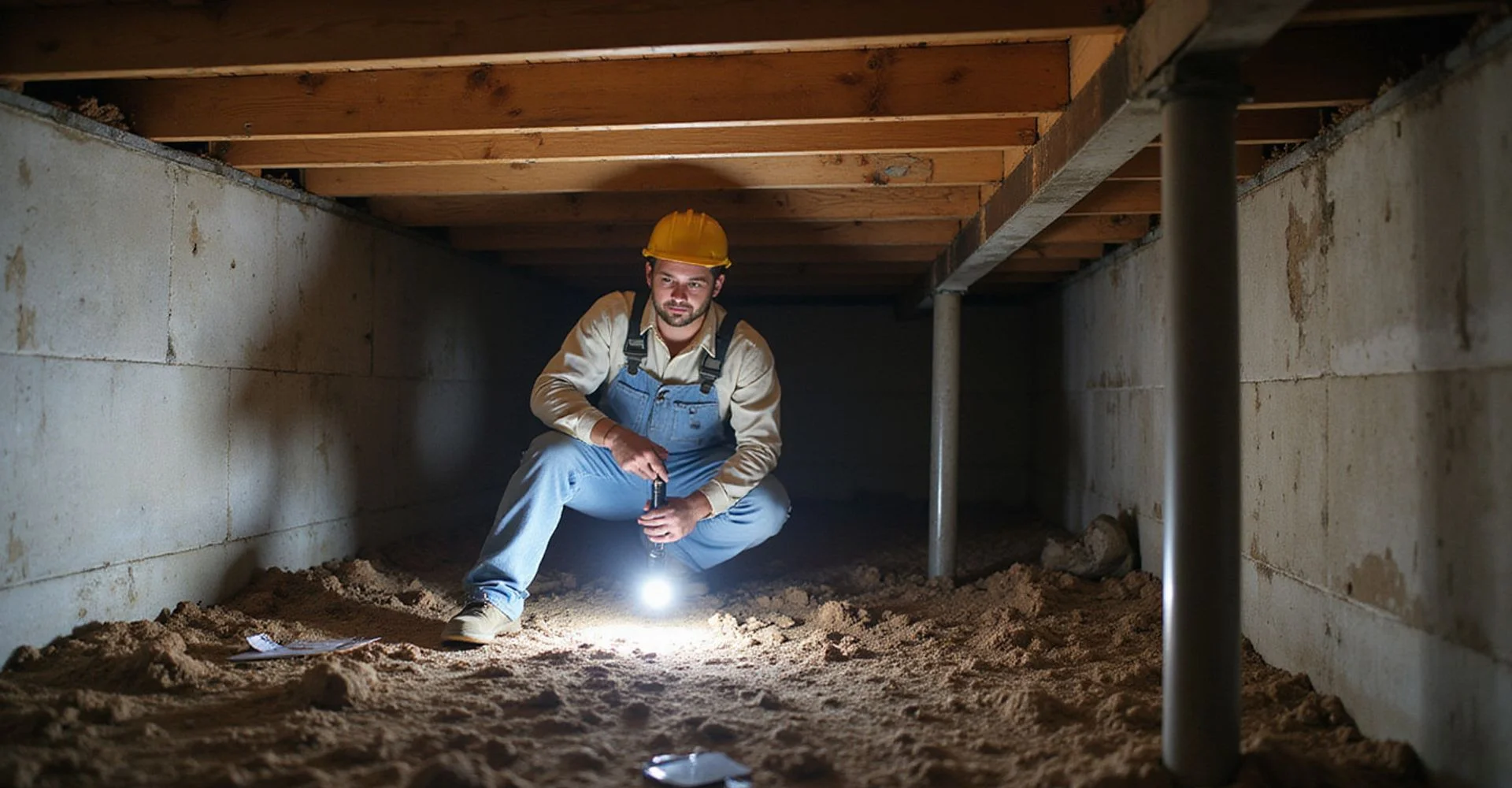
In a slab home, slope reflects the slab itself moving. In a pier-and-beam home, it can reflect settled piers, a failing girder, or deflected joists, which are three different repairs with three different prices. Distinguishing them requires getting under the house.

An elevation survey measures the slope precisely. That matters because perception is unreliable: a floor that feels dramatically off can measure within tolerance, and a floor that feels fine can show meaningful variance.

More detail: uneven or sloping floors.

Other observations worth recording

Gaps opening between baseboards and flooring. Separation at crown moulding. Cracked floor tiles in a line rather than at a single point. A porch or patio slab pulling away from the house wall. Soil visibly pulling back from the slab edge in late summer. Cracks that reappear in the same place after being patched.

Individually, each is one data point. Together, and tracked over time, they form a picture.

What appearance alone cannot establish

It cannot establish elevation, because you cannot see a half-inch of differential across a room. It cannot establish progression without an earlier reference point. It cannot distinguish settlement from heave, and that distinction changes the repair. It cannot separate soil-driven movement from a plumbing leak beneath the slab. And it cannot rule out original construction irregularity, because some houses were not built level to begin with.

This is also why there is no universal crack-width rule. A number from a brochure cannot answer questions that require measurement at your address.

The useful next step

Document what you see with dates and something for scale. Watch it across a season, because North Texas clay moves on an annual cycle. Then have it measured.

An evaluation costs you nothing for a standard homeowner visit, produces written findings you keep either way, and frequently ends with a recommendation to monitor rather than repair. That is a legitimate outcome and we write it down when the data supports it.

What affects the cost of warning signs?

We publish cost factors rather than a headline price, because scope is what moves the number. Your written quote itemizes each of these.

Observation costs nothing
Documenting what you see and when you saw it is free and is the single most useful thing a homeowner can do before any professional arrives.
Evaluation
No fee for standard homeowner evaluations. That is what converts an observation into measured evidence.
Monitoring instead of repair
Where measurements do not support repair, the recommendation is monitoring, which costs nothing beyond attention and periodic photographs.
Cosmetic repair
Sealing and patching addresses appearance. It is inexpensive relative to structural work and appropriate where movement is not active.
Structural repair
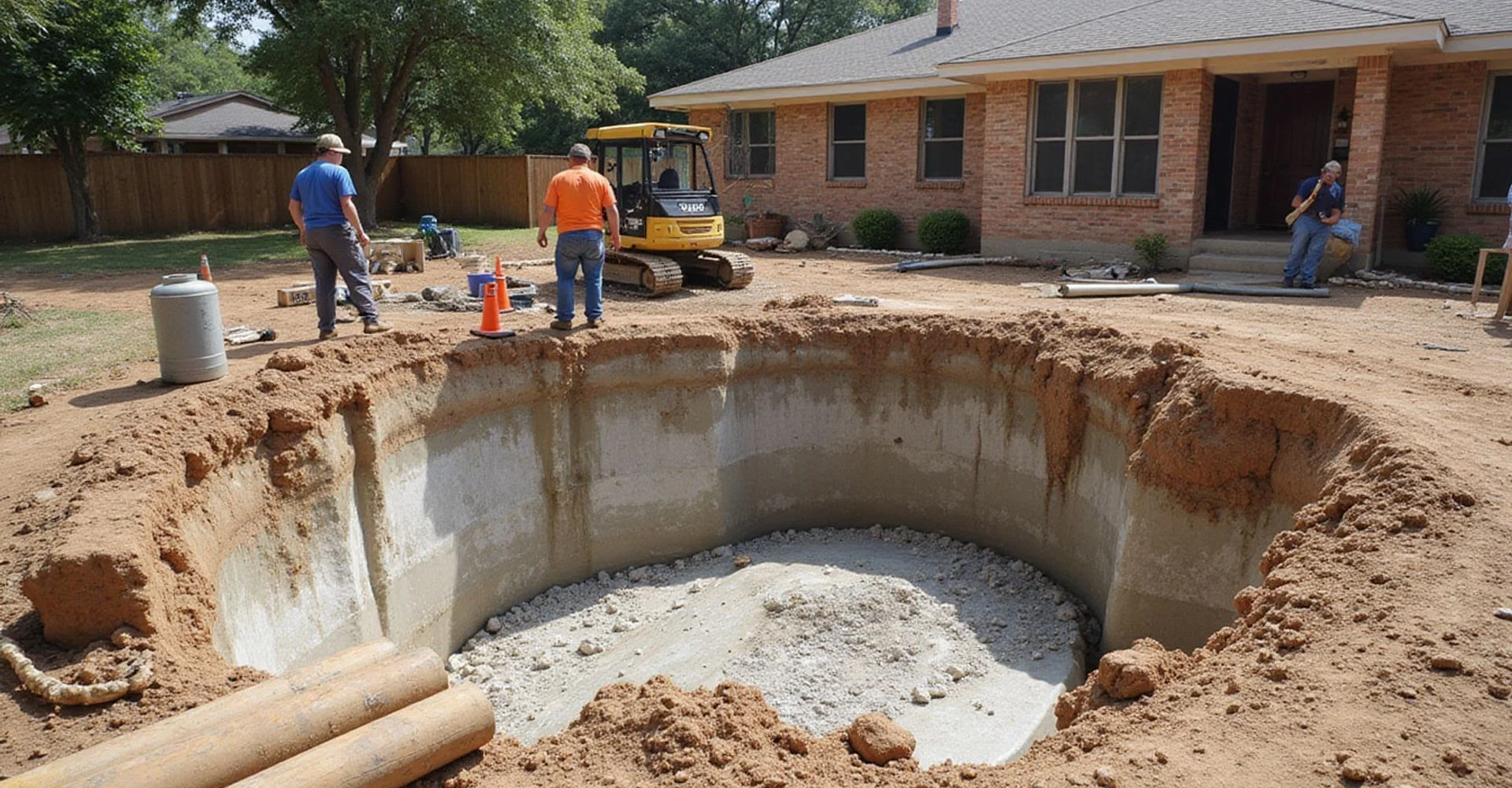
Where an evaluation documents active movement, scope and cost follow the pier plan, access, permits, and restoration involved.
Why choose us

Why choose Dallas Foundation Repair for warning signs

We will not diagnose from a photo

A photograph cannot establish elevation, progression, or cause. Anyone offering a verdict from an image is guessing with confidence.

No universal crack-width rule

There is no single width that declares a house safe or in trouble. Context and measurement decide, not a number from a brochure.

Seasonal movement named as such

Hairline seam cracking that opens and closes each year is normal clay behaviour. We say so rather than converting it into a quote.

Monitoring is a legitimate outcome

A significant share of evaluations end with a documented recommendation to monitor, and we put that in writing.

Evidence you keep

Findings documentation is yours regardless of whether you hire us, and it establishes a baseline for future comparison.

Plain explanations

You should leave the appointment able to explain to someone else what was measured and what it means.

Process

How our warning signs projects run

  1. Write down what you see

    Note location, direction, and rough width of cracks, which doors bind and on which edge, and where floors feel uneven.

  2. Date your photographs

    Photograph each observation with something for scale and note the date. A second photo months later is far more informative than one.

  3. Watch across a season

    North Texas clay moves with drought and rain. Whether a crack opens in August and closes in November tells you a great deal.

  4. Get it measured

    An elevation survey converts observations into data and answers whether there is movement behind what you are seeing.

How we handle warning signs differently

Feature Typical provider Dallas Foundation Repair
Response to a photo Remote verdict Context only; measurement required
Crack width rules "Over a quarter inch is structural" Measured elevation data decides
Seasonal movement Treated as a symptom Named as normal clay behaviour
"No repair needed" Rarely the answer Documented whenever data supports it
Homeowner documentation Not requested Encouraged and used in the assessment
Evaluation fee Varies No fee for standard homeowner evaluations
Our work

Warning Signs in the field

Documented project conditions from North Texas properties. Click any image to enlarge.

Testimonials

What customers say about our warning signs work

4.9 average across 150+ Google reviews

“They walked me through their elevation survey and showed my variance was normal. They didn't sell me repairs I didn't need.”
David B. Preston Hollow, Dallas
“They explained what the cracks could and couldn't tell us, which was the opposite of the pitch we got elsewhere.”
James T. Irving, TX
“No pressure, no scare tactics. Just an explanation of what was measured.”
Elena G. Plano, TX

Reviews shown are representative customer feedback compiled for this website.

Questions we get asked

Warning Signs FAQs

Which foundation warning signs actually matter?
The ones that appear together and change over time. A diagonal crack running from the corner of a door frame, a door on that same wall that has started binding on one edge, a floor that now slopes toward that corner, and separation at the brick outside in the same area form a coherent pattern, and a pattern is far more informative than any single observation. A hairline crack along a drywall seam with nothing else happening around it is a different situation entirely.
How do I know if my cracks are cosmetic or structural?
Appearance alone will not tell you, which is an unsatisfying answer but an honest one. Hairline cracks along taped drywall seams are frequently seasonal and cosmetic; diagonal cracks from door and window corners paired with sticking doors or sloping floors more often indicate movement. But the same-looking crack can arise from framing shrinkage in a newer home or from genuine settlement in an older one. An elevation survey establishes whether movement is behind it.
Is there a crack width that means I need repair?
No, despite how often a specific number gets quoted. Width tells you something about how much movement occurred at that point; it tells you nothing about whether movement is ongoing, what caused it, or whether the structure is compromised. A narrow crack that has doubled over two years is more concerning than a wider one that has been static since the Clinton administration. Change matters more than width.
Do sticking doors always mean foundation problems?
No. Humidity swells wood doors and frames, which is why some doors bind in August and behave in February. What suggests movement is the pattern: a door binding consistently on one edge rather than all round, doors on the same wall affected together, a visible taper in the gap along the frame, and matching cracks nearby. Planing the door treats the symptom; if the frame is out of square because the foundation moved, it comes back.
My cracks open in summer and close after rain. Is that normal?
That pattern is characteristic of expansive clay and is generally normal seasonal movement. Soil shrinks through the long dry months and expands when it takes water back on, and the structure follows. The concerning version is different: cracks that widen progressively year over year without closing, or a crack that opens and then only partially closes, leaving a bit more each cycle. That is why dated photographs across seasons are so useful.
What should I document before calling anyone?
Location and direction of each crack, roughly how wide, when you first noticed it, and whether it has changed. Which doors or windows bind and on which edge. Where floors feel uneven, and whether that is new. Anything relevant about the property: recent drought or plumbing leaks, large trees near the house, drainage changes, additions, and any prior foundation work with its records. Photographs with a coin or tape for scale and a date on each are worth more than any description.
Should I seal or patch cracks while I wait?
You can, but it removes your best evidence. A patched crack that reopens tells you movement is active; a patched crack you have not looked at since tells you nothing. If appearance is bothering you, photograph and measure first, then patch, and note the date you did it so a reopening has a timeline attached.
Can you tell me anything from photos I send?
Context, yes. A verdict, no. Photographs help us understand what you are describing and prepare for the visit, and we are glad to receive them. What a photo cannot do is establish elevation, show whether a crack is progressing, or distinguish cause. Remote diagnosis from an image is a practice this business is explicitly set up to avoid, and you should be wary of anyone who offers it.
What if I have no visible cracks but the floors feel off?
That is worth measuring. Slope is often perceptible before cracking appears, particularly in homes with flexible finishes or where previous decorating has hidden earlier evidence. Furniture that rocks, a ball that rolls consistently in one direction, and a subtle sense of walking downhill in one room are all observations an elevation survey can confirm or dismiss quickly.
What happens after the evaluation?
You receive written findings: elevation results, distress observations, site conditions, and our assessment of what the data supports. If repair is warranted, an itemized quote follows with pier locations marked. If it is not, we document that alongside what to monitor and what would change the recommendation. Either way the documentation is yours and becomes the baseline against which future observations can be compared.
No fee for homeowner evaluations

Ready to get a written quote for warning signs?

We start with an elevation survey, explain the findings, and document the scope before any work is scheduled.

  • Elevation survey before any recommendation
  • Itemized written scope and exclusions
  • Transferable written warranty
Call Request a Quote