

Why plumbing belongs in a foundation conversation
Under a slab foundation, drain lines run through the same soil that supports the house. The two are not separate systems in any practical sense, which is why plumbing testing belongs in the scope of a slab foundation repair rather than in a separate conversation afterwards.
That produces a relationship running in both directions, and both directions cause real problems for homeowners.
A leak can cause movement. Water escaping a drain line saturates the clay beneath one area. Clay that takes on water swells. Sustained swelling under part of a slab produces heave, which looks from inside the house very much like settlement somewhere else.
Movement can cause a leak. When a slab shifts, buried lines shift with it. Joints separate, older cast iron cracks, and a system that was sound develops a fault.
Ignore the relationship and you can end up installing piers over an active leak, which treats the symptom and leaves the cause running.
What a hydrostatic test involves
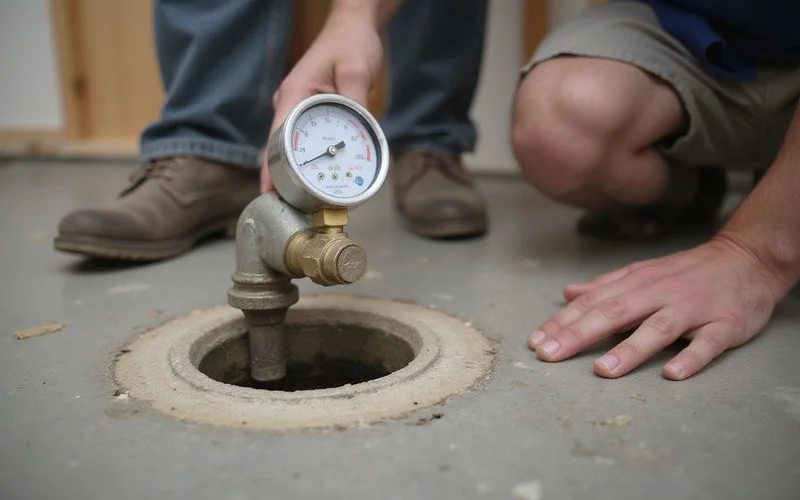
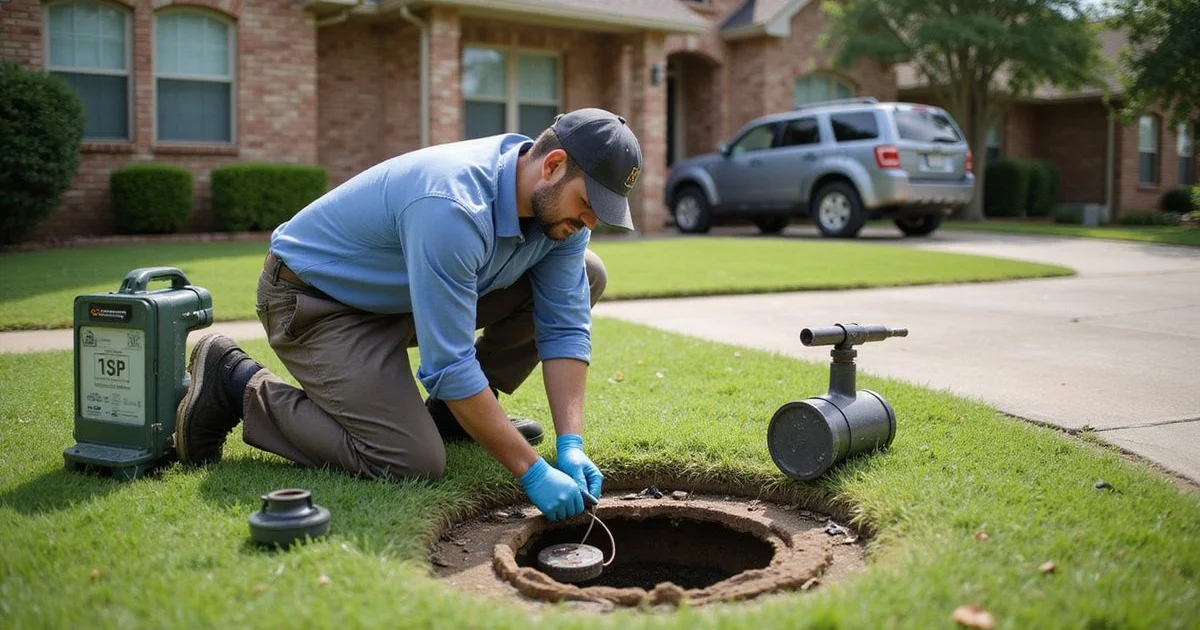
A licensed plumber isolates the drain system, typically at the cleanout, using an inflatable test ball. The system is then filled with water to a defined level and monitored.
If the level holds, the lines are holding. If it drops, water is escaping somewhere beneath the slab, and further isolation narrows down the section responsible.
It is a straightforward, well-established procedure that produces an unambiguous result. That unambiguity is the point: it converts a suspicion into a finding.
Signs that make testing worth doing first
- An unexplained increase in the water bill
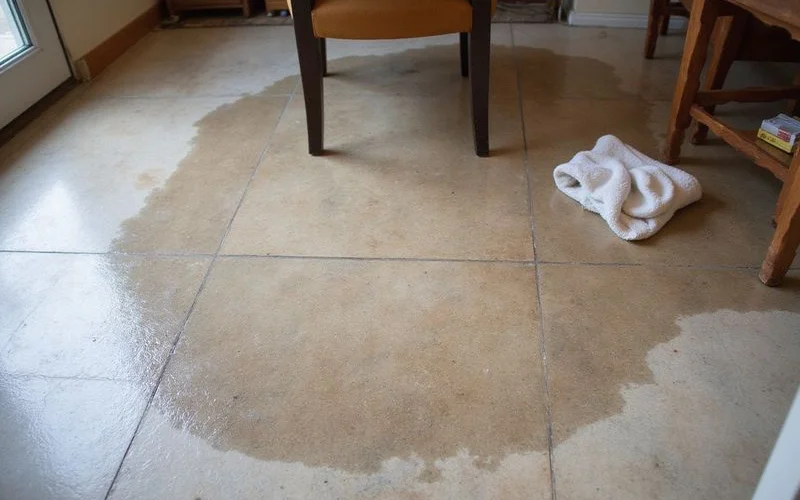
- A warm or persistently damp patch on a slab floor
- The sound of water running when nothing is on
- A localized high area on the elevation survey rather than a low one
- Damp soil at one point along the perimeter with no drainage explanation
- Movement concentrated near a kitchen, bathroom, or laundry
Any of these makes a pre-lift test a sensible step rather than an optional extra.
Pre-lift testing: what it changes
If the test comes back clean, you proceed with a structural scope knowing water is not the driver. That is worth the modest cost on its own.
If it finds a leak, several things change. The leak is repaired first, because installing piers over an active leak leaves the cause in place. Soil that has been saturated for a long period may take time to stabilize. And the structural scope may look different once the cause is resolved, particularly where the pattern was heave rather than settlement. Our guide on heave versus settlement covers why.
Post-lift testing: what it protects
A lift moves the slab, and the drain lines move with it. A joint that held fine at the original elevation can open at the new one.
Testing afterwards confirms the lines survived. It also settles attribution: with dated results before and after, nobody is arguing months later about whether the foundation work caused a plumbing problem.
We now include post-lift testing on every slab project for exactly that reason.
How the trades coordinate
The plumber is a separate contractor, licensed for plumbing work, contracting and billing independently. We coordinate the scheduling; we do not produce or interpret the result.
That separation matters. A plumbing finding produced by the company selling the foundation repair carries an obvious conflict. One produced by an independent licensed trade does not.
Where a leak is found and tunneling is part of the foundation scope, the same tunnel usually serves both, which saves the plumber breaking out a floor separately. Our guide on under-slab tunneling covers that overlap.
Permits and warranty relevance
Plumbing repair is permitted work in its own right, handled by the plumber under their licence.
Warranty matters too. Most foundation warranties exclude damage arising from an unresolved plumbing leak, which is reasonable but also means an untested system can leave you with coverage that quietly does not apply. Testing before and after, with results in the file, protects the coverage you paid for.
Your slab repair scope should state who tests, when, and what happens if a leak is found.