

Why moisture is a structural issue here
In a pier-and-beam home, the structure carrying your floor is wood, and it sits directly above bare ground.
Soil gives off moisture continuously. In a crawlspace with poor ground cover and restricted airflow, that moisture raises humidity under the floor and stays there. Wood held at sustained high humidity rots, and it rots first at the points where it is doing the most work: joist ends, sill plates, and girder bearings.
So crawlspace moisture is not a comfort issue that happens to be under the house. It is the mechanism that degrades the load path over time.
What moisture damage looks like
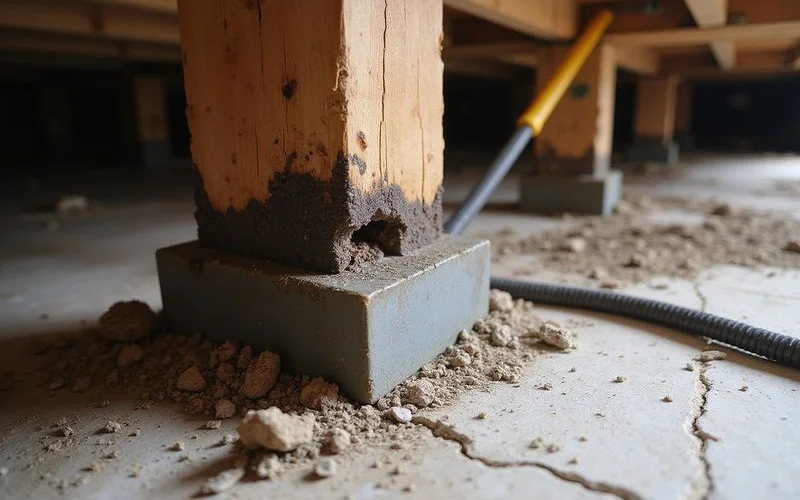
- Soft or crumbling joist ends where they bear on a girder or ledger
- Rot in sill plate sections, particularly on the shaded side of the house
- Fungal growth on framing or the underside of the subfloor
- Cupping hardwood above, as the floor absorbs humidity from below
- A musty smell upstairs, since air moves from the crawlspace into the house
- Efflorescence on piers, the white mineral deposit left where moisture passes through masonry
Insects follow moisture as well, which compounds the problem.
The measures, from least to most
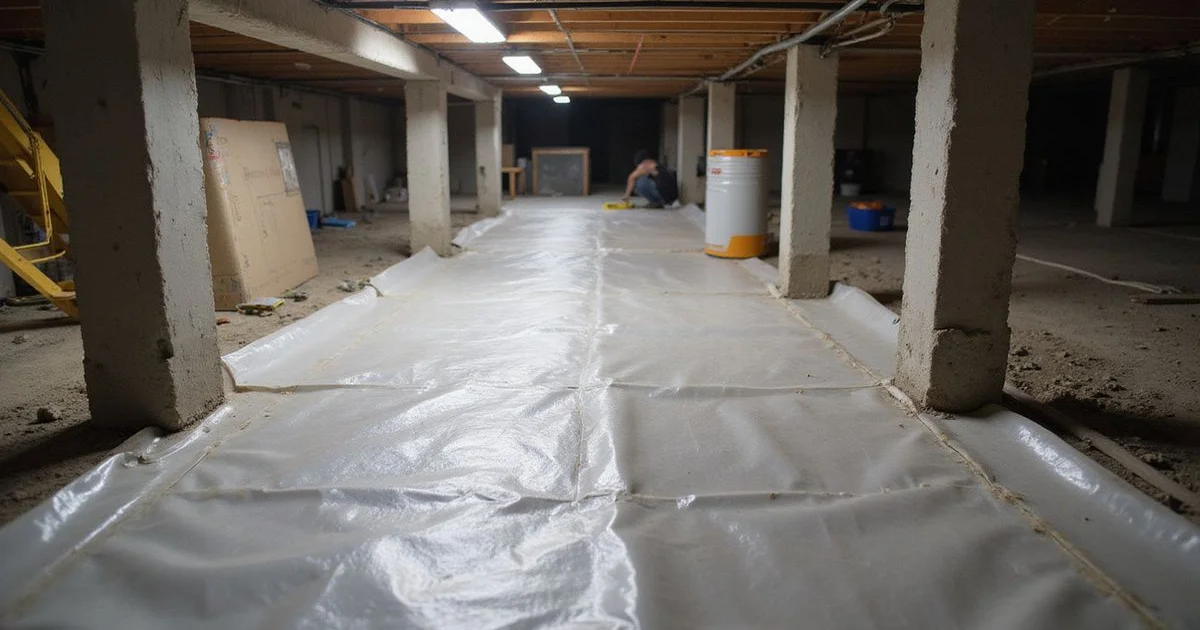
Ground cover. Heavy polyethylene laid across the crawlspace floor, seams overlapped and edges run up the piers and perimeter. This is the single most effective and least expensive intervention, and plenty of older Dallas crawlspaces still have none.
Drainage correction outside. If water is entering because grade slopes toward the house or a downspout discharges at the wall, no amount of internal work fixes it. Our guide on how drainage affects your foundation covers the outside picture.
Ventilation. Clearing blocked, buried, or overgrown vents so air actually moves. Conventional ventilation works reasonably in North Texas for much of the year, though it works against you during humid summer months when outside air is wetter than crawlspace air.
Dehumidification. A crawlspace-rated unit maintaining a target humidity, usually alongside sealing the vents rather than relying on them.
Full encapsulation. Sealing the crawlspace from ground and outside air with a heavy barrier across ground, piers, and perimeter, vents sealed, and humidity managed mechanically.
What encapsulation actually involves
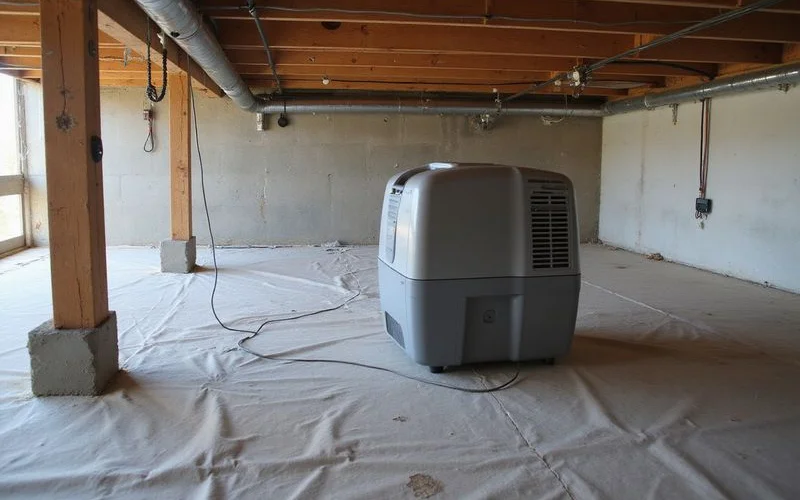
Debris and any existing sheeting are cleared. A heavy polyethylene barrier, typically 10 to 20 mil, is laid across the ground with overlapped and sealed seams, run up the piers and perimeter walls, and terminated below the sill plate so wood remains visible for inspection.
Vents are sealed. A dehumidifier is installed with a condensate route. Any drainage issue inside the crawlspace is addressed first, because sealing a crawlspace that takes on water simply traps it.
That last point matters. Encapsulation is not a solution to water entering the crawlspace. It is a solution to humidity in a crawlspace that is otherwise dry.
When encapsulation is worth it
- Persistent high humidity that ventilation has not controlled
- Evidence of ongoing moisture damage to framing
- A crawlspace used for storage or containing ductwork
- Repeated insect activity linked to moisture
- After structural repair, to protect the work you have paid for
When it is not
- Where the actual problem is water entering from outside, which needs drainage correction first
- Where conventional measures have not been tried at all
- Where the crawlspace is already dry and well ventilated
- Where the budget would be better spent on documented structural repair
We scope moisture control from measured conditions rather than selling it as a standard addition to every pier-and-beam quote. If a contractor proposes encapsulation without having measured humidity or looked at your exterior grade, that is worth questioning.
How it fits with structural work
Moisture control does not lift a floor. It does not replace a girder or sister a joist.
What it does is stop the conditions that damaged the wood from continuing to damage the new wood. On a project where rot has already been found, addressing moisture is what keeps the repair from becoming a recurring expense.
Our scopes separate support work, carpentry, and moisture control as distinct line items so you can see which you are buying, and choose the sequence that fits your budget.