

The relationship in one paragraph
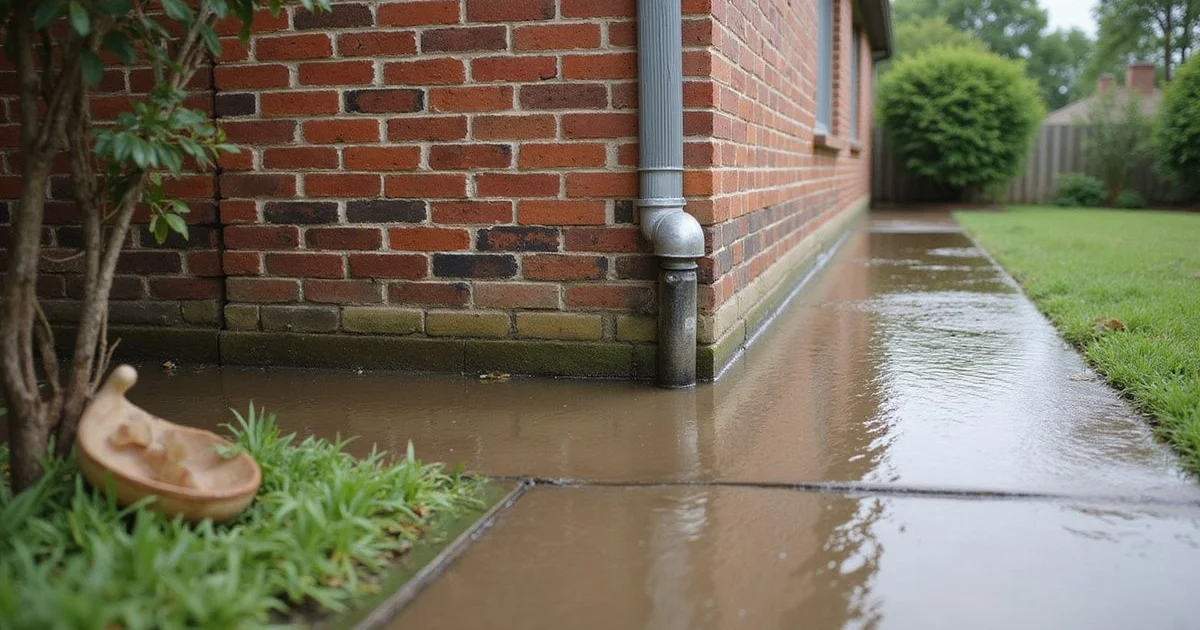
Expansive clay changes volume with moisture content. A residential foundation sits in the upper few feet of soil, the active zone, where that change is greatest. Water concentrated at one part of the perimeter makes that area swell and shrink more than the rest, and uneven movement around a building is what cracks it.
Drainage work is aimed squarely at that unevenness.
The active zone
The soil beneath your house is not uniform in behaviour with depth.
Near the surface, moisture content varies substantially with weather. That variation drives the volume change that moves foundations, and the depth over which it happens is the active zone. In North Texas it is commonly the first several feet, which is exactly where a slab or a shallow pier footing sits.
Below that, moisture is far more stable. That is why underpinning works: it transfers load past the zone that moves onto material that does not.
Why uneven matters more than wet
A house sitting on uniformly moist clay is generally fine. A house sitting on uniformly dry clay is generally fine too.
What causes damage is one part of the perimeter behaving differently from another. Consider a reasonably typical Dallas property:
- The south elevation bakes in full sun all summer and dries hard.
- The north elevation sits in shade and stays damper.
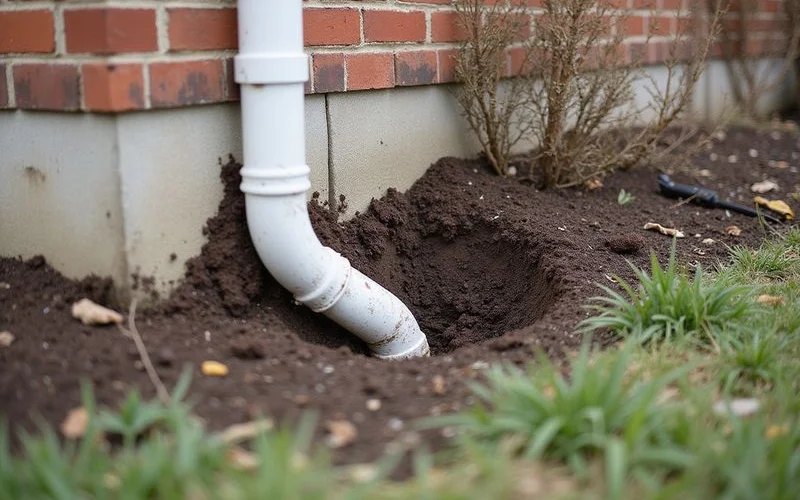
- A downspout at the east corner has been discharging at the wall for twelve years.
- A mature live oak on the west side draws moisture out of the soil within its root zone.
Four elevations, four different moisture regimes, one structure spanning all of them. The differential is what distorts it.
Positive grading
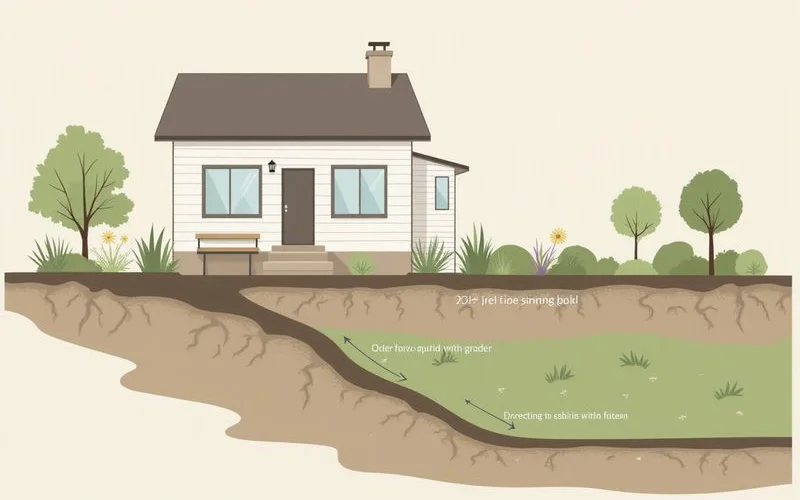
The foundational measure, in both senses. Soil should fall away from the house over the first several feet so surface water runs off rather than collecting at the wall.
Grade flattens over time. Beds get topped up with mulch, soil settles, patios get added at the wrong level, and what was a positive fall becomes flat or negative without anyone noticing.
Walk the perimeter after heavy rain and look for where water sits. Re-establishing fall is frequently the cheapest meaningful thing available and should be checked before anything more elaborate is considered.
Roof runoff
A roof collects a large volume of water and delivers it through a handful of downspouts. Discharged at the wall, that is the most concentrated moisture source most houses have.
Extensions carrying discharge well away from the foundation are inexpensive and effective. Buried discharge lines work too, provided the outlets stay clear; a blocked line simply backs water up where you least want it.
The limits, stated plainly
Drainage work is preventive and protective. It is not corrective.
It does not lift a foundation that has already settled. It does not repair a failed girder. It does not fix a plumbing leak. And on its own it does not reverse damage that has already occurred.
What it does is reduce the driver. That protects a sound foundation, and it protects a repair you have already paid for, which is why we frequently recommend drainage alongside structural work rather than instead of it.
Any contractor presenting drainage as a cure for documented movement is overstating what it does.
How drainage appears in an evaluation
An evaluation records site conditions alongside the elevation survey: where the grade falls, where downspouts discharge, where water pools, whether existing drains are functioning, and where trees sit relative to the structure.
That context matters because it frequently explains the elevation pattern. A low corner on the survey and a downspout discharging at that same corner for a decade is not a coincidence, and it tells you what to fix so the repair holds.
What to do next
Start with the free things: clear the gutters, extend the downspouts, check the grade, clear the drain outlets. A surprising share of drainage problems resolve there.
Where water still collects against the structure after that, our guide on French drains versus surface drainage covers which approach suits which situation.