

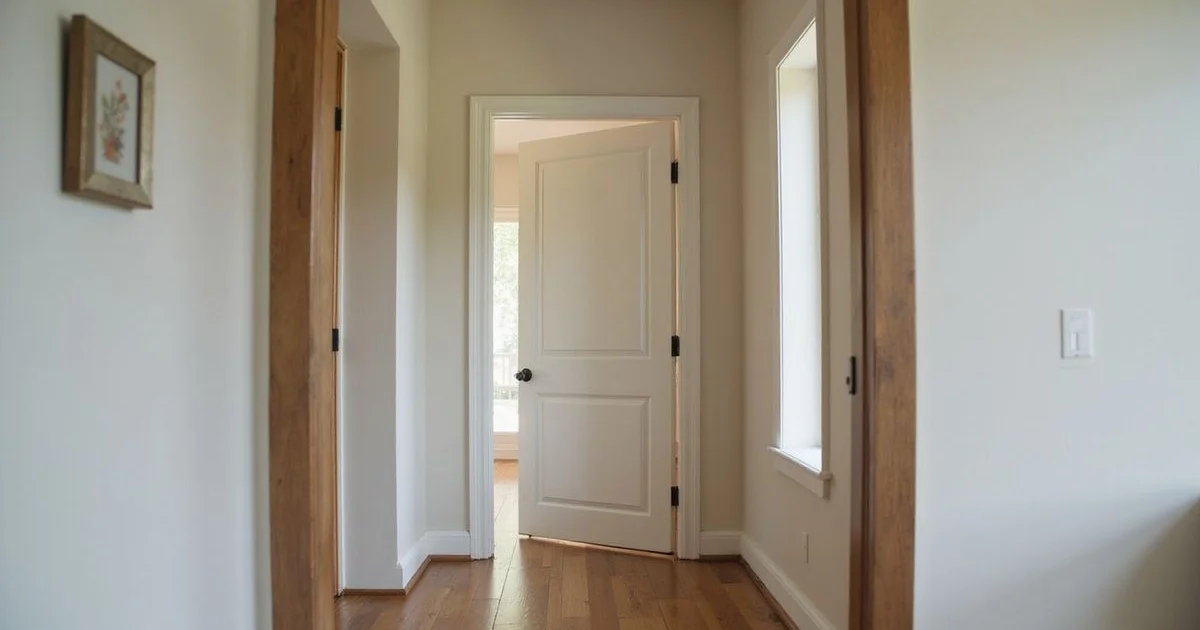
A door is a gauge
A door hangs in a frame that was fitted square. If it swings freely and latches cleanly, the frame is still close to square. If it binds, something about that relationship has changed.
That makes doors one of the more useful things in a house for noticing structural change, because you operate them every day and you notice immediately when one stops working.
The question is what changed: the frame, or the door.
The innocent explanation: humidity
Wood absorbs moisture from the air and swells, then releases it and shrinks. Dallas humidity varies enough across the year to move a door measurably.
The signature of a humidity problem: the door binds during the humid part of the year and behaves the rest of the time, the binding is fairly even along the closing edge rather than concentrated at one corner, several doors around the house are affected at once, and the gap around the door stays roughly parallel.
This is normal. It is also why a door sticking once in August is not a reason to call anyone.
The pattern that suggests movement
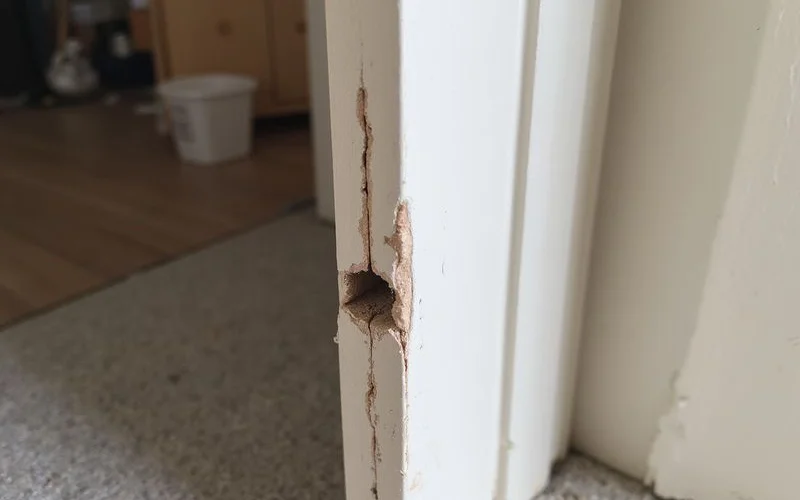
Binding at one corner rather than along the whole edge. If the top corner catches and the bottom swings free, the frame is no longer square.
A visibly tapering gap. Look along the gap between door and jamb. Parallel means square. Wider at one end than the other means it is not.
Localised to one area of the house. Doors on the same wall or the same elevation affected together, while the rest of the house is fine.
Persistent. It does not resolve when the weather changes.
Accompanied by other signs. A diagonal crack at the frame corner, a gap opening at the baseboard nearby, floors that have changed slope in the same area.
Windows and hardware
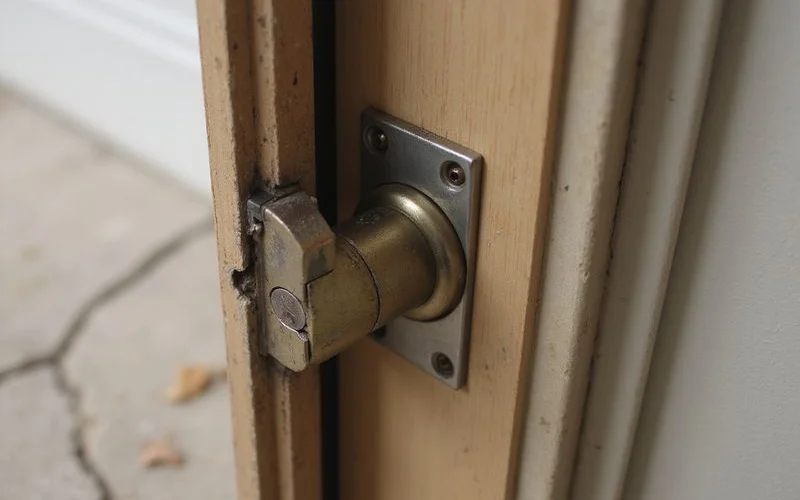
Windows report the same information. Sashes that no longer slide, casements that will not close, and locks that no longer engage all suggest the opening is out of square.
Hardware is particularly precise. A deadbolt is a close-tolerance fit into a strike plate, and a misalignment of a few millimetres stops it engaging. A deadbolt that has stopped lining up is telling you the jamb moved relative to the door, which is not something humidity does subtly.
Exterior doors that no longer seal at the threshold, letting light or draught through at one corner, are worth recording too.
What appearance alone cannot establish
Whether the frame is out of square because the foundation moved, or because the house was built that way, or because a previous renovation disturbed it.
How much movement is present, since a door catches on a very small change.
Whether that movement is continuing or stopped years ago.
Which is why this observation, like every other on our foundation warning signs page, points toward measurement rather than toward a conclusion. Floors are the other everyday gauge worth checking at the same time — see uneven or sloping floors.
What to document
- Which doors and windows are affected, and where in the house
- Which edge or corner binds
- Whether the gap tapers, and in which direction
- When it started, and whether it has worsened
- Whether it varies with the seasons or stays constant
- Any cracks near the same openings
Before you plane the door
Planing a door to fit a frame that has gone out of square works until the frame moves again, at which point you have a permanently cut-down door and the same problem.
If you are going to do it anyway, photograph the gap first and note the date. That record is useful later. And if several doors are affected in the same area, that is the point to book an evaluation rather than reaching for a plane.