


Two different questions
When a crack appears, homeowners usually ask one question: should I fix this? There are actually two.
Is there active movement behind it? That is a structural question, answered by measurement.
Do I want the crack to stop being visible? That is a finish question, answered by a decorator or a mason.
Confusing the two produces both of the common mistakes: sealing cracks while the structure keeps moving, and paying for structural work to close a crack that was never a structural problem.
Cosmetic repair: what it is and does
Cosmetic repair addresses appearance and, on an exterior crack, water entry.
Interior: cutting out the crack, taping and compounding, then repainting. Flexible fillers are sometimes used where minor seasonal movement is expected.
Exterior masonry: repointing the affected mortar joints, or where brick units are involved, cutting out and replacing them.
Concrete: sealing with a flexible or rigid filler depending on whether any movement is expected.
None of this changes what the structure is doing. It changes what the structure looks like.
When cosmetic repair is the right answer
- An elevation survey shows variance within normal tolerance
- Cracking is consistent with seasonal movement in clay, opening in the dry and closing in the wet
- The crack is in a finish rather than a structural element
- Movement, if there was any, has stopped
- Structural repair has been completed and the finishes now need making good
That last case is common and worth stating. Cosmetic repair after a lift is normal, expected, and belongs with a finishing trade rather than with us.
Structural repair: what it is
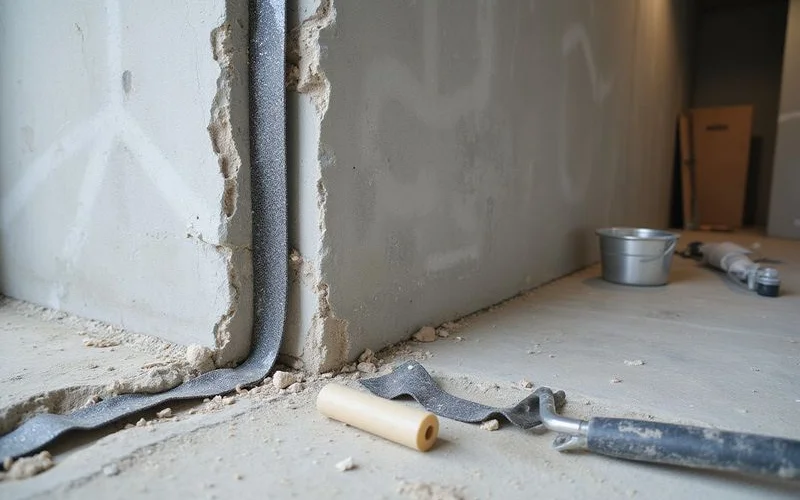
Structural repair addresses the movement or the loss of capacity, not the visible crack.
Underpinning installs piers beneath the foundation to transfer load onto material that does not move seasonally. This is what addresses the cause of most Dallas movement.
Epoxy injection bonds a crack in a concrete element, restoring monolithic behaviour across it. It is appropriate where the concrete is otherwise sound and movement has stopped; injecting a crack in a structure that is still moving simply moves the crack.
Carbon-fiber reinforcement bonds high-tensile strapping across a crack or wall to resist further movement in a specific direction. It has genuine applications, and it is also sometimes sold where underpinning is what is actually needed.
Structural carpentry replaces or reinforces failed framing in a raised foundation.
Why the crack does not decide
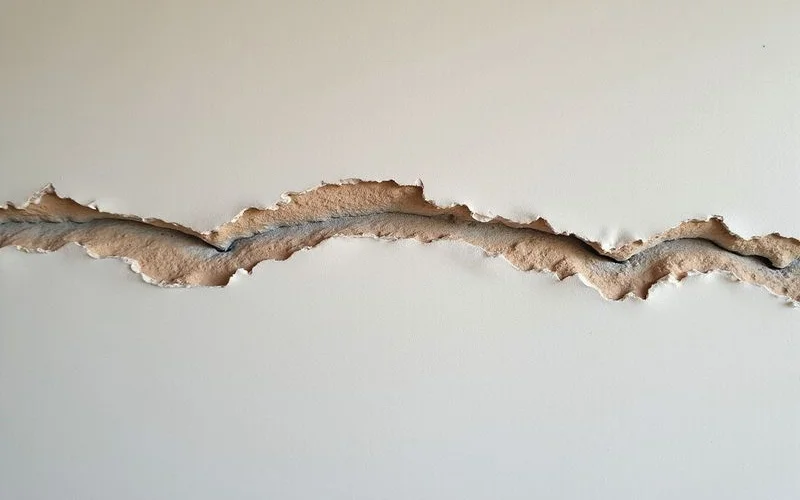
The crack is a symptom. It reports that something moved at some point. It does not report how much, whether the movement is continuing, or what caused it.
Two houses can have visually identical cracks where one needs eight piers and the other needs a tube of filler. The difference is not visible in the crack.
There is also no universal crack-width rule, despite how frequently a specific number is quoted. Width reflects how much movement occurred at that point, nothing more. Progression matters more than width, and context matters more than either. Our foundation warning signs page covers the broader picture, and interior wall cracks and what they mean sets out the patterns worth measuring.
How the evaluation decides
An evaluation produces a relative elevation profile of the floor and a documented distress survey.
If the profile shows measurable differential variance and the distress pattern corresponds to it, that is a structural finding. If the profile is within tolerance and the cracking sits in seams and finishes with no corresponding pattern, that is a cosmetic finding.
Where the answer is cosmetic, we say so and you keep the written documentation. That is a legitimate outcome, and it happens often enough that anyone claiming otherwise about their own evaluations is worth a second look.
One practical suggestion
If you are going to seal a crack you are unsure about, photograph and measure it first and note the date you patched it.
A sealed crack that reopens along the same line is telling you movement is active. A sealed crack you never documented is telling you nothing at all.