

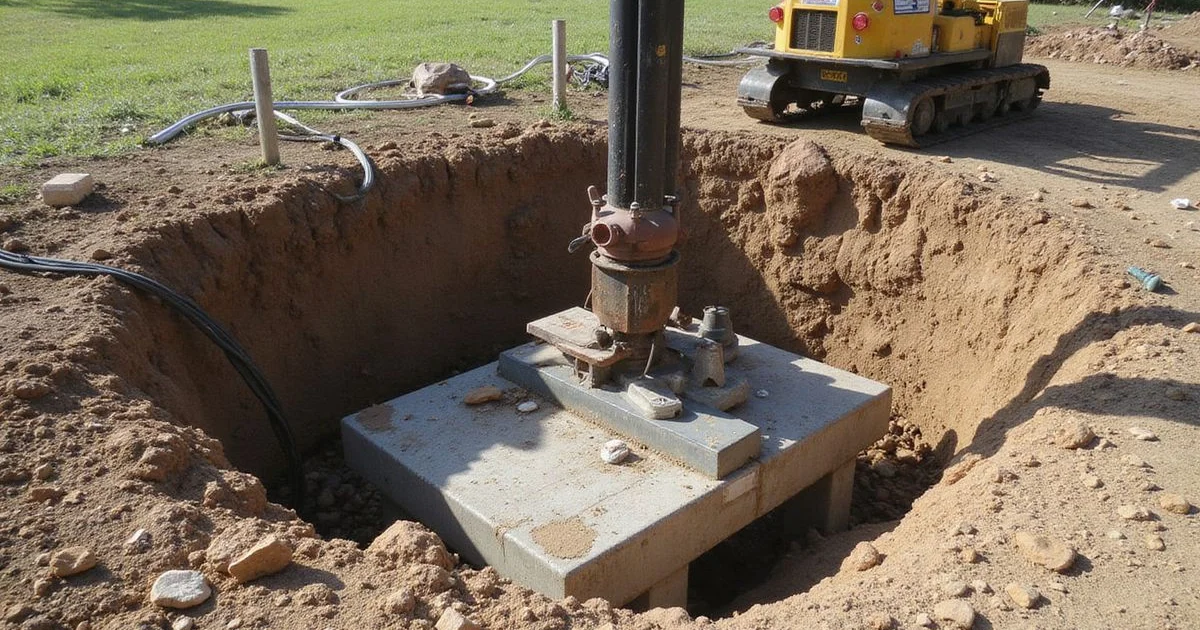
The definition
Driven to refusal means a pier has been advanced into the ground until it stops moving under the hydraulic force being applied, indicating it has met material capable of carrying the structural load. The term applies across the foundation repair methods used here, whether the column is steel or pressed concrete.
The important part of that definition is what it does not say. It does not specify a depth. Refusal is a performance condition observed at the moment of installation, not a number chosen beforehand.
You will see the phrase in almost every underpinning proposal in Dallas. This guide covers what it implies for your project.
What the pier is looking for
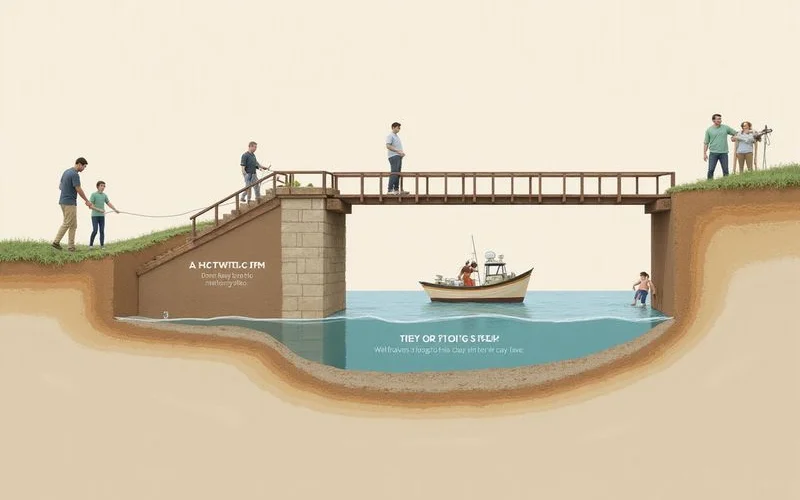
Load-bearing strata: soil or rock with enough strength to carry the load transferred through the pier without meaningful further movement.
Above that, in North Texas, sits expansive clay that changes volume seasonally. That is the layer the foundation currently depends on and the layer the pier is passing through to get past.
What counts as adequate bearing depends on the load at that location. A pier under a two-story bearing line needs more capacity than one under a single-story rear elevation.
Skin friction
As a pier advances, soil presses against its sides along its whole length. That friction resists further advance independently of what the tip has reached.
On a long column it accumulates substantially, which is why a bulkier element such as a pressed concrete cylinder is more depth-limited than a narrower steel section. Our guide on steel piers versus concrete piers covers the practical consequence.
Skin friction is also why refusal is not a purely binary signal, and why installation pressure is recorded alongside depth rather than instead of it.
Why depth varies across one property
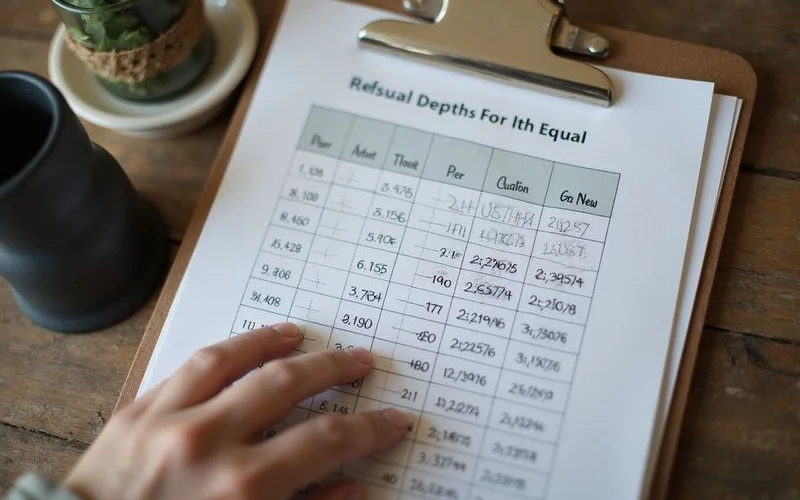
The subsurface profile beneath a residential lot is not a layer cake. Weathered shale, competent bearing material, fill from original construction, and rock lenses all sit at different depths in different places.
Two piers on the same house, twenty feet apart, can reach refusal at meaningfully different depths. That is normal and expected, and it is why the installation log records depth per pier rather than one figure for the job.
If a proposal guarantees a uniform depth at every location, it is promising something the ground does not reliably deliver.
Premature refusal
A pier can stop advancing without having reached load-bearing strata: an old footing, buried construction debris, a utility, or a rock lens sitting above the target layer.
That is premature refusal, and it is materially different from true refusal. The pier has stopped, but it is not bearing on material that will carry the load durably.
Distinguishing the two is a judgement call informed by the depth reached, the pressure recorded, and what is known about the site. The usual response is to relocate and re-drive.
Your scope should state how obstructions and premature refusal are handled, and how any cost implication is treated. Discovering that policy mid-project is unpleasant for everyone.
How depth affects cost
Deeper drives consume more material and take longer per pier. On steel that is more sections; on pressed concrete, more cylinders.
That is one reason a quote cannot honestly promise a fixed price for a fixed depth before anything has been driven. What a good quote does instead is state the per-pier basis, the system, and how variation is handled.
Questions worth asking
- Will depth and installation pressure be recorded for each pier?
- Will I receive the installation log in my closeout package?
- What happens if a pier meets an obstruction before reaching bearing?
- How do you distinguish true refusal from premature refusal on site?
Those four answers tell you a great deal about how a contractor works. Our foundation repair methods page sets out how we handle each of them.