

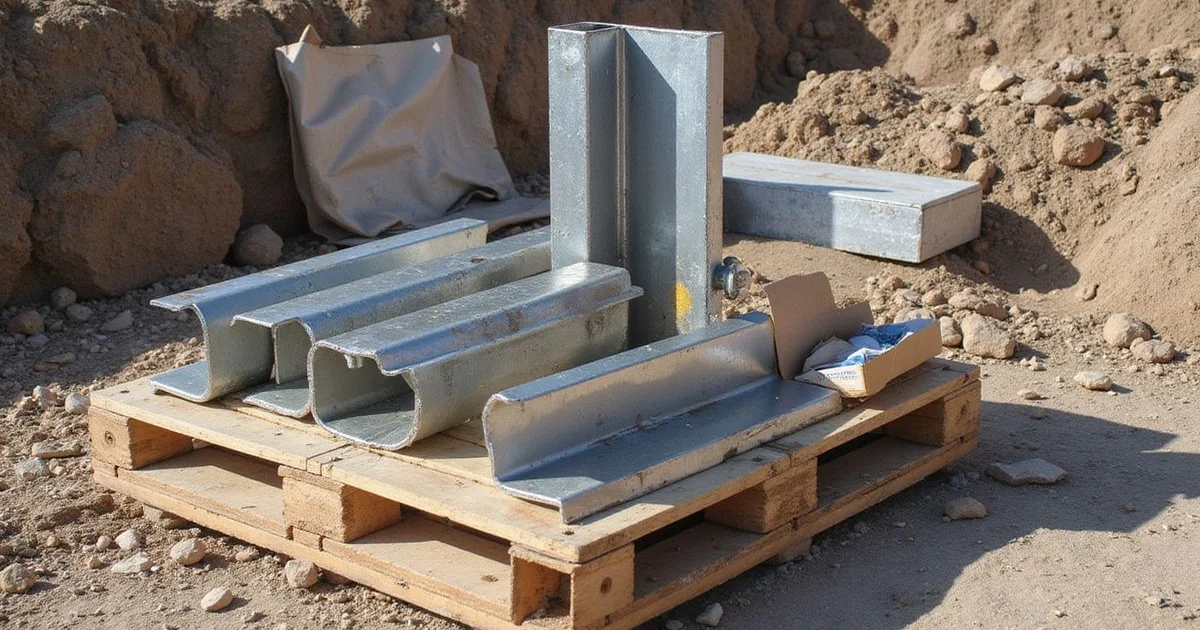
What a steel pier system is
A steel pier is a column of hollow steel sections driven beneath a foundation to transfer structural load from soil that moves seasonally onto material that does not. It is one of the foundation repair methods used on Dallas-area homes, alongside pressed concrete and helical systems.
The installation uses the weight of the structure itself as the reaction force. A hydraulic ram seats against the grade beam and drives sections one after another into the ground, each coupled to the last, until the pier meets material capable of carrying the load.
That endpoint is called refusal, and our guide on what driven to refusal means covers why it is a performance condition rather than a depth you can promise in advance.
Multi-wall piers
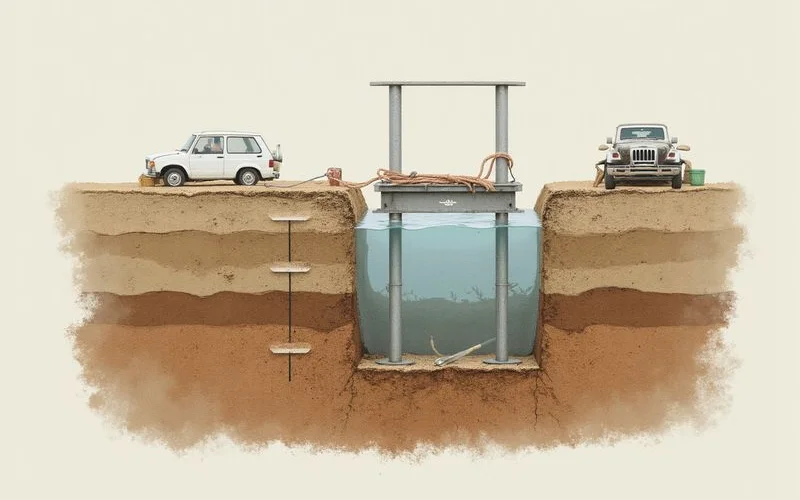
The most common residential steel system in the Dallas area. Sections of steel pipe are driven in sequence, forming a continuous column beneath the foundation.
Two properties make steel effective at depth. Its cross-section is relatively small, so it displaces less soil and accumulates less side friction as it advances. And the material strength lets it push through resistant layers that would stop a bulkier element.
The combination is why steel typically reaches deeper bearing than a pressed concrete system will.
Helical piles
A helical pile is a steel shaft with helix plates welded to it, turned into the ground with a torque head rather than driven.
The useful property is measurement. Installation torque correlates with capacity, which means the installed capacity of each pile can be verified during installation rather than inferred from depth afterwards.
In residential work, helicals are used where verified capacity matters, where access limits driving equipment, or where the structure cannot provide adequate reaction force for a pressed system. They are also used on new lightweight construction where there is no building weight to press against yet.
How load transfer works
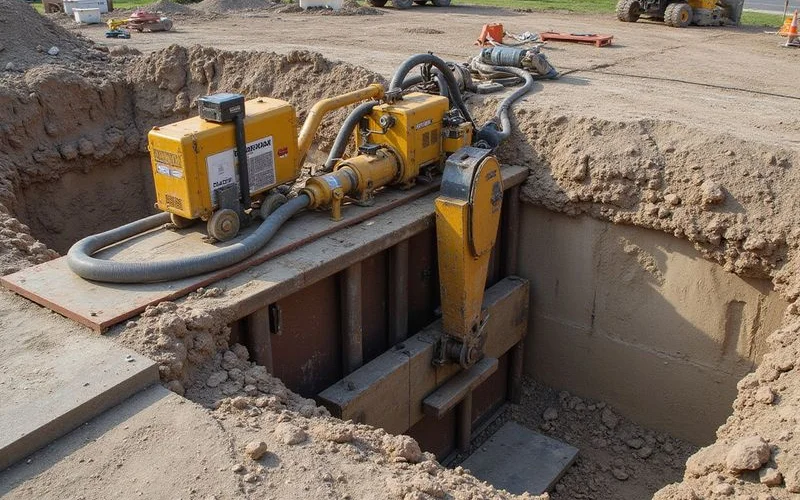
Once the pier is at refusal, a bracket assembly connects it to the grade beam or footing above.
Hydraulic jacks then transfer the building’s weight from the soil onto the pier and, where elevation recovery is part of the scope, lift the structure incrementally while elevation is monitored. Shims set the final position and the load is transferred permanently.
The bracket detail matters and is easy to overlook. It is the connection between everything below ground and the structure above it, and the scope should say what connection is being used.
When steel is specified
- Competent bearing material sits well below the surface at your site
- Loads at specific pier locations are concentrated, such as under a two-story bearing line
- The shallower soil profile is unreliable or variable
- Access limits what other systems can achieve
- Verified installed capacity is required, in which case helicals are often the answer
Limitations, stated honestly
Cost per pier is generally higher than pressed concrete. You are paying for depth capability.
Depth is not unlimited. Steel reaches further, not forever, and site conditions still govern.
Obstructions cause premature refusal. Old footings, buried debris, and rock lenses stop a pier before it reaches bearing. That is a different situation from true refusal, and the correct response is usually to relocate and re-drive. Your scope should say how that is handled.
Corrosion is a consideration in aggressive soils. Coatings and material specification address it, and it is a fair question to ask.
It is not automatically the right answer. A contractor who installs only steel will find steel to be the solution every time. The reasoning should appear in your proposal.
How to read this on a proposal
Look for the system named explicitly, the depth approach described, the bracket connection specified, and confirmation that depth and pressure will be recorded per pier.
Those records are the only durable evidence of what went into the ground once backfill goes in. Our foundation repair methods page covers how method selection is made across the systems available.