

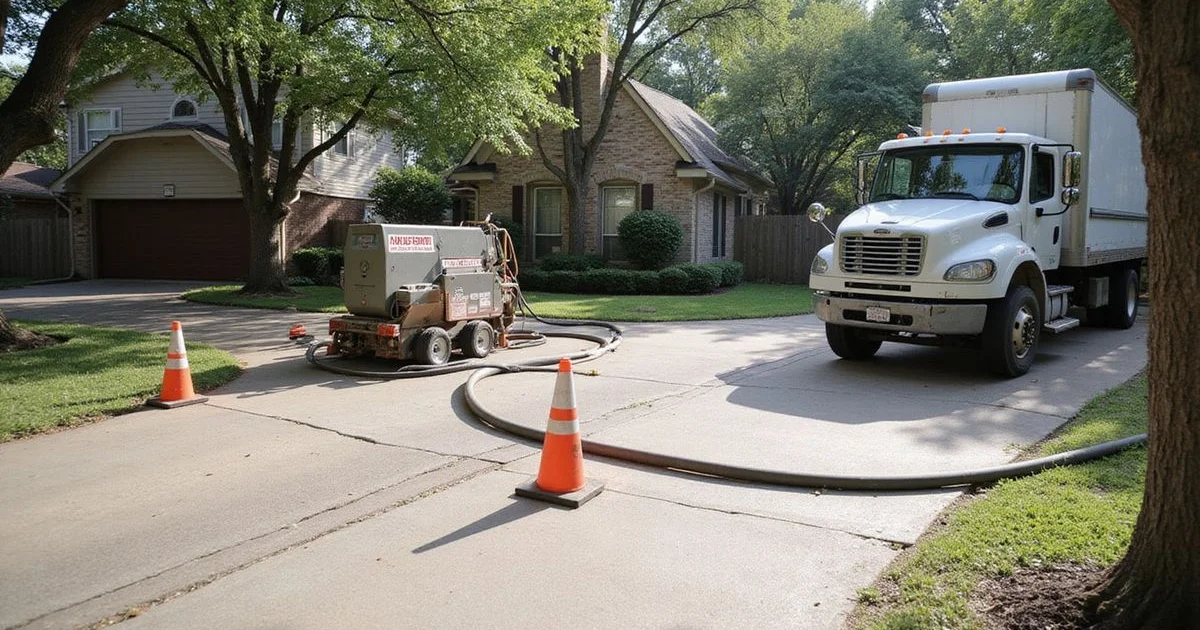
Two ways to lift a slab
Both methods raise settled flatwork by injecting material beneath it through holes drilled in the panel. The material differs, and so do the practical consequences.
Mudjacking, also called slabjacking, pumps a cement-based slurry, typically a mix of soil, sand, cement, and water. It is the older technique and has been lifting concrete for decades.
Polyjacking, or foam jacking, injects a two-part high-density polyurethane that expands on contact, fills voids, and generates lift.
Neither is a gimmick. They are different tools. Before comparing them, it is worth confirming your slab is a candidate at all — our guide on what surfaces polyurethane concrete leveling can fix covers where lifting works and where it does not.
Weight
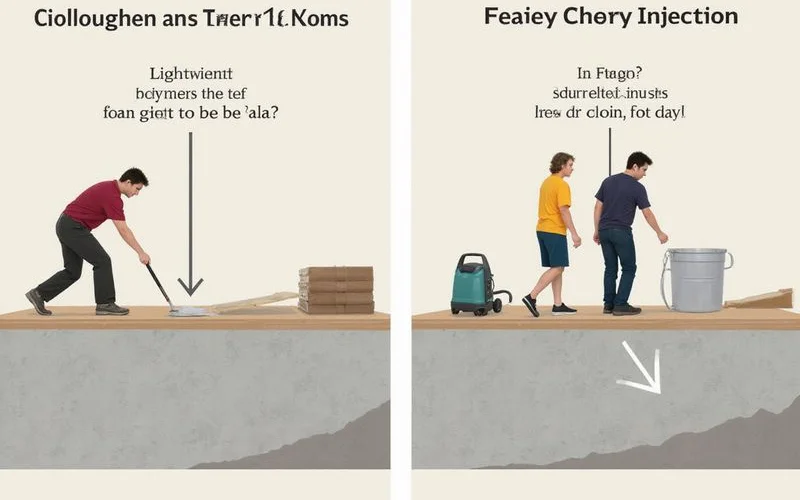
This is the most significant difference in engineering terms.
Slurry is heavy. It is essentially a cement mixture, and a meaningful volume of it is added beneath the slab. Where the sub-base was already too weak to hold the concrete’s own weight, adding substantially more load is not obviously helpful.
Polyurethane weighs a fraction as much. On a weak sub-base, that matters: the void gets filled and the slab gets lifted without significantly increasing the load the soil is carrying.
Hole size
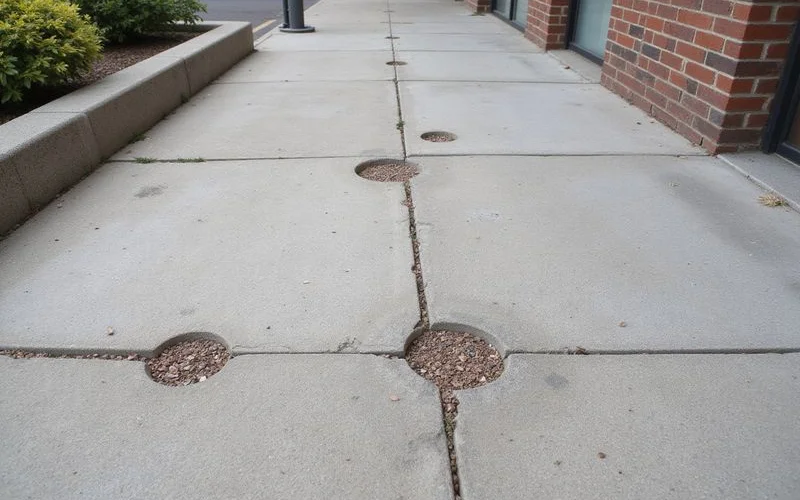
Foam needs penny-sized ports. Slurry needs considerably larger holes to pump a cement-based mix.
On a broomed or textured driveway, both patch reasonably well. On smooth, coloured, stamped, or decorative concrete, the difference is visible, and it is worth weighing if appearance matters.
Cure time and return to use
Polyurethane reaches most of its working strength within minutes. Same-day return to use is normal, often within an hour.
Slurry needs longer to cure before taking load. On a driveway or a main walkway, losing access for a day is a genuine inconvenience, and this is frequently the deciding factor for homeowners.
Water resistance
Closed-cell polyurethane does not absorb water and is not eroded by it.
Slurry is more susceptible to washout over time, particularly where water movement beneath the slab was part of what caused the settlement in the first place. If an active water path has not been resolved, that difference compounds.
Precision
Foam injection allows fairly fine control over lift, since the material expands progressively and injection can be stopped and resumed while elevation is monitored.
Slurry lifts in a somewhat blunter fashion. Skilled operators achieve good results, but the control is less granular.
Cost
Slurry is often cheaper per job. Material costs less and the equipment is simpler.
Foam typically costs more up front. Whether it costs more overall depends on the site: if the lightweight advantage prevents a repeat lift in three years, or if same-day access has real value to you, the arithmetic changes.
Side by side
| Polyurethane foam | Cement slurry | |
|---|---|---|
| Added weight | Very light | Substantial |
| Hole size | Penny-sized | Considerably larger |
| Return to use | Usually same day | Often next day |
| Water resistance | Closed-cell, resists washout | More susceptible |
| Lift control | Fine | Less granular |
| Typical cost | Higher | Lower |
When each fits
Foam is usually the better choice where the sub-base is weak, where turnaround matters, where the concrete is visible or decorative, where water movement contributed to the settlement, or where precision matters at a trip-hazard joint.
Slurry can be the sensible choice where the sub-base is sound, where budget is the binding constraint, where the surface is utilitarian and hole size does not matter, and where losing access for a day is acceptable.
What matters more than the method
Whether the cause has been resolved.
Fill a void created by an active leak or an uncorrected drainage path, with either material, and another void will form. The lift buys time rather than fixing the situation.
That is why our assessment looks at what caused the settlement before quoting the lift, and why we will say when the useful spend is drainage work rather than concrete leveling.