

The basic requirement
Concrete leveling works on flatwork: concrete that sits on soil and carries only its own weight plus whatever walks or parks on it.
That distinguishes it from a house foundation, which carries the structural load of a building and is corrected by installing piers. Foam beneath a slab does not reach bearing strata and does not carry structural load.
If a contractor offers to level your house with polyurethane foam, they are describing something different from what this page covers.
Surfaces that are usually candidates
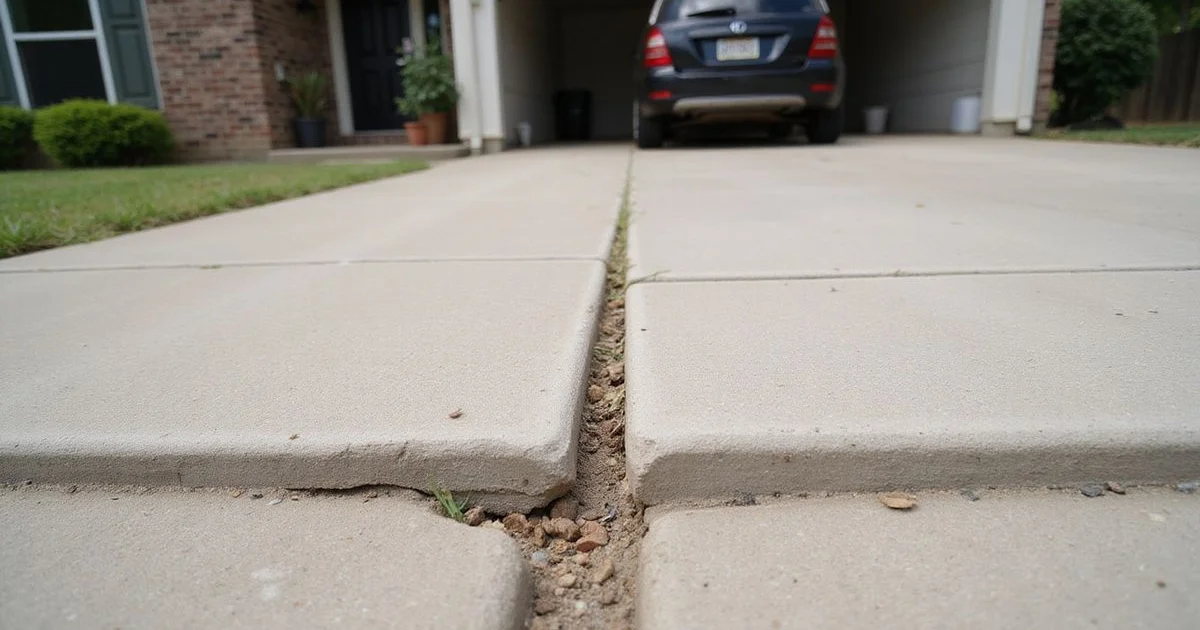
Driveways and garage approaches. The most common residential job. Settlement at the garage approach is particularly frequent because the fill there was placed last and compacted least.
Sidewalks and walkways. Including public-facing sections where a lip at a joint is a genuine trip hazard.
Patios. Both attached and detached, provided the panel is intact.
Pool decks. Settlement around a pool is common, and foam’s light weight is an advantage where the sub-base is already struggling.
Porch slabs, steps, and landings. Where they have settled as a unit rather than fractured.
Garage floors. Where the slab is sound and has settled rather than broken.
What makes a panel a good candidate
Structural integrity. The panel is largely intact. A single crack is usually fine; a slab in five pieces is not.
Adequate thickness. Thin or deteriorated concrete may not survive the lift.
A sub-base that will hold. Once voids are filled, the soil beneath needs to support the raised position.
A resolved cause. If an active leak or drainage problem is still washing fines out, it will create the next void regardless.
Accessible. Equipment needs to reach the work. Back gardens behind narrow gates take longer to set up.
When leveling is not the right answer
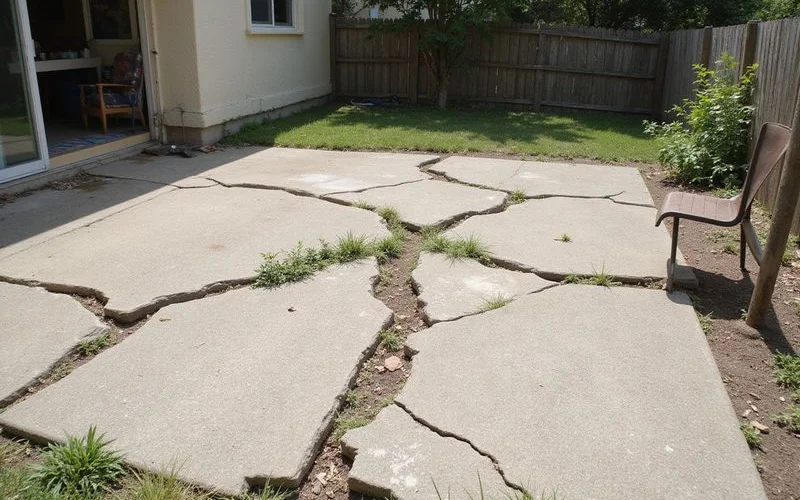
Badly fractured slabs. Lifting fragments produces a lumpy, unstable result that fails quickly.
Significant deterioration. Spalling, exposed and corroded reinforcement, or concrete that is crumbling at the surface.
Severe active washout. Where erosion is ongoing, filling the void treats the symptom. The water source has to be addressed first, and sometimes that is the whole job.
Structural elements. Anything carrying building load. That is foundation work.
Where drainage would be compromised. Raising a panel to dead level can flatten or reverse the fall that keeps water away from the house. Where a lift would trap water against the structure, we say so before quoting.
Where replacement is the honest answer, we say that too. Taking money for a repair we expect to fail is not a trade we want.
What settlement in Dallas usually means
Flatwork settles for reasons that are its own rather than the house’s: expansive clay shrinking during drought, water washing fines out from underneath, poor compaction at original placement, or tree roots displacing and drying the soil.
A sunken driveway is not evidence about your slab foundation. If the house also shows symptoms, that is worth evaluating on its own merits, and we will not use one to sell the other.
How to assess your own flatwork first
Before calling anyone, a short walk around tells you most of what a quote will be based on.
Look at the joints. A clean lip at a control joint, where one panel has dropped relative to its neighbour while both remain intact, is the classic candidate. That is settlement, and settlement is what foam addresses.
Look at the panel itself. One or two cracks through an otherwise sound slab is usually fine. Multiple cracks dividing the panel into separate pieces that move independently is a different situation.
Look at the surface. Concrete that is flaking, crumbling, or exposing aggregate has deteriorated in its own right. Lifting it does not restore it.
Look at where the water goes. If the settled area coincides with a downspout outlet, an irrigation head, or a low point where runoff collects, the cause is probably still active and worth addressing before or alongside the lift.
Tap it. A hollow sound under part of a slab suggests a void beneath, which is exactly what foam fills.
What a lift actually achieves
It is worth being clear about the outcome. Foam leveling raises a panel back toward the elevation of its neighbours and fills the void underneath it. It does not repair cracks, restore a worn surface, or change the concrete in any way.
If your driveway is both settled and visibly deteriorated, leveling fixes the first problem and leaves the second. Whether that is worth doing depends on how much life the surface has left, and we would rather have that conversation before the quote than after the work.
What the process involves
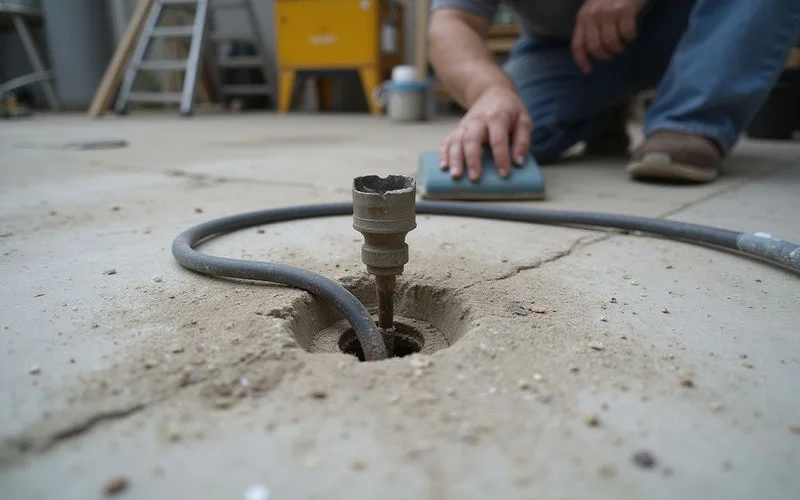
Assessment of candidacy and sub-base condition. A target profile set to preserve drainage away from structures. Penny-sized ports drilled through the panel. Polyurethane injected, filling voids first, then lifting while elevation is monitored. Ports patched. Surface generally back in use the same day.
Our guide on polyjacking versus mudjacking compares the two injection methods if you are weighing them up.