


Why preparation changes the outcome
An evaluation measures the present. What it cannot measure is the past, and the past is often the most informative part of the story.
Whether a crack appeared last month or has been there for fifteen years, whether a door started binding after a particular drought, whether the previous owner had work done: none of that is visible in an elevation survey. You are the only source for it.
Thirty minutes of preparation makes the visit meaningfully more useful. Our foundation evaluation page covers what happens on the day, and what happens during a foundation evaluation walks through the visit step by step.
Photograph what concerns you
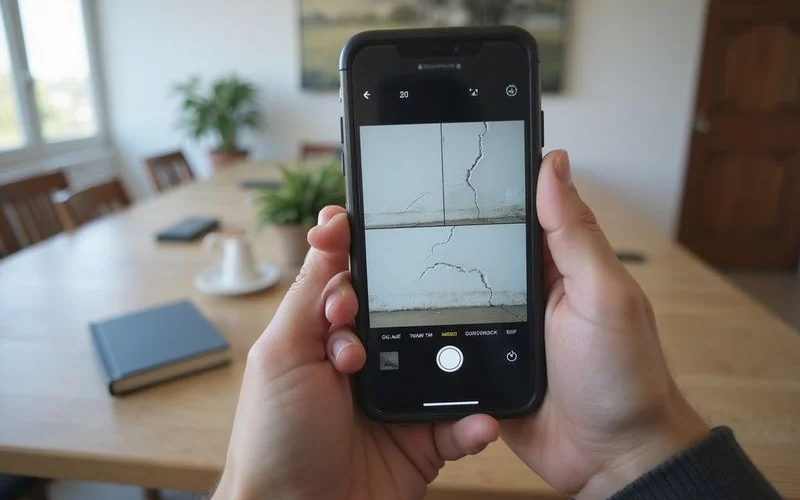
For each crack, gap, or slope you have noticed:
- Photograph it with something for scale. A coin, a ruler, a credit card.
- Note the date. Phone photos carry it automatically, which is one good reason to use your phone.
- Take a wide shot as well as a close-up so the location is identifiable later.
- If you have older photos showing the same area, dig them out. A two-year comparison is worth more than anything taken today.
Write down the timeline
For each item, note when you first saw it and whether it has changed since.
“Diagonal crack above the back bedroom door, first noticed August 2025, roughly doubled in width by August 2026” is genuinely useful. “There are some cracks” is not.
If you cannot remember exactly, approximate honestly. An approximate date with a stated uncertainty is better than a confident guess.
Gather the property history
- Prior foundation work. Scope, invoices, elevation records, permits, warranty documents. If you bought the house with work already done, whatever the seller passed on.
- Engineering letters. Any assessment from a structural engineer.
- Plumbing history. Leaks, repairs, re-pipes, and roughly when.
- Additions and renovations. When, and whether they involved the foundation.
- Drainage changes. New patios, regrading, landscaping, gutter work.
- Trees. Planted or removed, and roughly when. Tree removal in particular can change soil moisture substantially.
Note what you know about the foundation type
You do not need to be certain, and confirming it is part of the visit. But if you know you have a crawlspace, or know you have a slab, say so when booking. It affects what the technician brings and how long to allow.
Clear access
Inside: clear the main walking paths so floors can be surveyed without shifting furniture around the house. Nothing needs to leave the property.
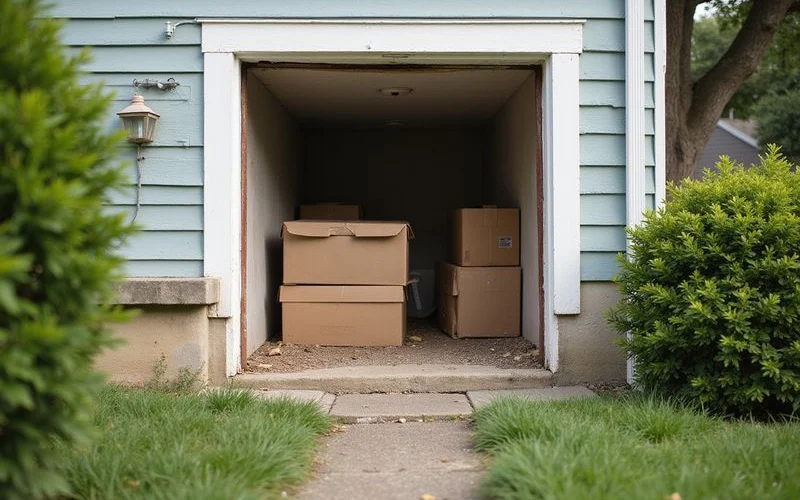
Crawlspace, if you have one: the access door needs to be reachable and openable. Move stored items, cut back shrubs, and check the opening is not painted or screwed shut.
Outside: the technician walks the full perimeter. Gates unlocked, dogs secured, and a path around the house that does not require climbing over anything.
Prepare your questions
Write them down. It is easy to forget what you meant to ask while someone is explaining contour readings to you.
Worth asking:
- What do the elevation readings actually show, and is that within normal tolerance?
- Is this settlement or heave?
- What do you think is driving it?
- If repair is warranted, how was the pier count determined?
- What is specifically excluded from any quote?
- What documentation do I receive, and do I keep it if I do not proceed?
What not to do
Do not patch cracks you are concerned about right before the visit. A patched crack removes the evidence. If appearance is bothering you, photograph and measure first, then patch, and note the date.
Do not adjust doors that have started binding, for the same reason.
And do not worry about presenting the house well. Nobody is judging the housekeeping. The technician is reading the structure.